
It is not so important why a corpse might leave its grave; the main thing is to prevent it from doing so.
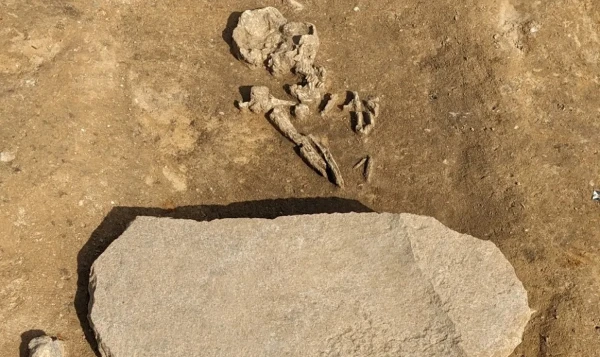
In Oppin, Germany, specialists from the State Office for Heritage Management and Archaeology of Saxony-Anhalt discovered an ancient burial site that can be characterized as a "zombie trap." To date, this is one of the oldest sites of its kind, dating back approximately 4,200 years. This leads to an important conclusion – even in the Stone Age, people feared that the dead could sometimes come back to life. They took measures to keep them in their graves.
The grave is believed to have been created by representatives of the Bell Beaker culture. This culture existed at the end of the Neolithic and the beginning of the Early Bronze Age, around 2800 BC, and covered much of modern Europe.
The bearers of this culture were intellectually advanced, so attributing the efforts to create a "zombie grave" solely to superstition is not so simple. It is possible that there was some real tragic experience behind this.
It is not so important why a corpse might leave its grave; the main thing is to prevent it from doing so. Apparently, this logic worked perfectly thousands of years ago, which is why the corpse in the grave in Oppin was pinned down with a large stone, measuring 90 by 50 cm and over 10 cm thick. Notably, it lies on the feet of the body – so that the zombie could stir in the grave but could not stand up and leave.
Most of these zombie traps share one characteristic – their creators had a very low opinion of the mental abilities of the revived dead, but acknowledged their physical strength. Therefore, for example, it was customary to bury suspicious individuals on their stomachs, face down – upon awakening, a zombie would instinctively start clawing at the ground right in front of itself. Thus, it would end up burying itself even deeper.















Leave a comment