
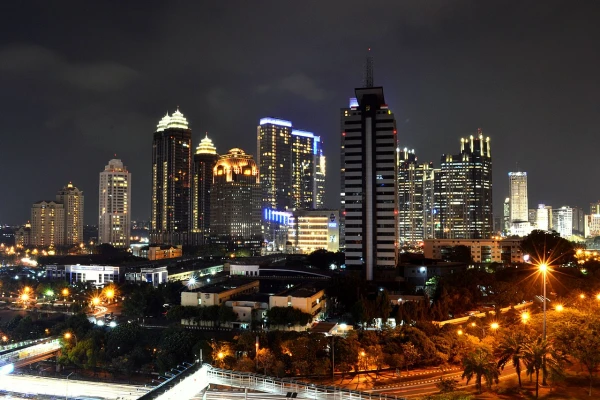
The city is safe, but too chaotic.
Jakarta has become the most populous city in the world with 42 million residents, surpassing Tokyo for the first time in decades, according to the UN report "World Urbanization Prospects 2025."
The capital of Indonesia has risen from 33rd place in the UN 2018 ranking, when it had 11 million residents, while Tokyo has dropped to third place with 33 million. Dhaka, the capital of Bangladesh, now holds second place with approximately 37 million people.
Here’s what Russian-speaking internet users advise about the city:
"Most of the beautiful photos of Jakarta are taken from above, like yours. At ground level, it’s dirty, polluted, noisy, and overcrowded. Walking is a challenge. It’s better to enjoy the shopping malls.
And yet, the city has a few redeeming qualities. The locals are nice, crime is low, the weather is warm, and prices are generally low (but so is the quality), food can be good (but make sure to get your typhoid vaccination).
Very little works smoothly, almost nothing is planned or developed with care and attention to detail. As a foreigner, you will have "WTF" moments at least 10 times a day, even if you know how to navigate here, but locals consider this dysfunction normal and have tremendous patience."
Supermarkets: in small ones, like Indomaret, about 1 in 10 (or more) price tags are incorrect, and many are missing altogether. If you point out an incorrect price tag, the good staff might go check, but they won’t remove it. Sometimes cashiers (plural!) are too busy with paperwork to serve customers, even if you’re the only one. The checkout lines move about 3 times slower than, say, in Thailand or Malaysia. If you only need a soda and see 4 people in front of you, just forget it and leave; it’s not worth your time. The aisles are too narrow, and the air conditioning is weak.
Walking: the streets and buildings are designed to be as hostile to pedestrians as possible. Very few streets have sidewalks at all, and what exists is often 60 cm wide, unsafe, and blocked. There are almost no pedestrian traffic lights at crosswalks; you have to guess from the behavior and signals of cars/motorcycles when it’s least risky to cross. In most places, there are barriers/walls, and you have to walk 100 meters forward and the same back to get where you need to go (for example, to a shopping mall or train station), although it would be simple to build easy access (and beneficial for businesses that need foot traffic).
Note how I said "hostile to pedestrians" and not "friendly to cars." With traffic jams leading the world, Jakarta is not great for cars either, although they invest a lot of effort and money into automotive infrastructure. There is a silver lining to the traffic jams. For example, taxi drivers in Bangkok often complain and refuse rides if they think the trip will lead them into a bad jam. In Jakarta, they always agree, as traffic jams are everywhere and always. Often, cars stuck in traffic make it easier to cross the street.
Perhaps the most frustrating thing about Jakarta is that it has such great potential. If only there were a mindset of continuous improvement and thoughtful planning at all levels (like in most other big cities), it could easily rival Bangkok, Kuala Lumpur, or Saigon and be great for both tourists and locals.











Leave a comment