
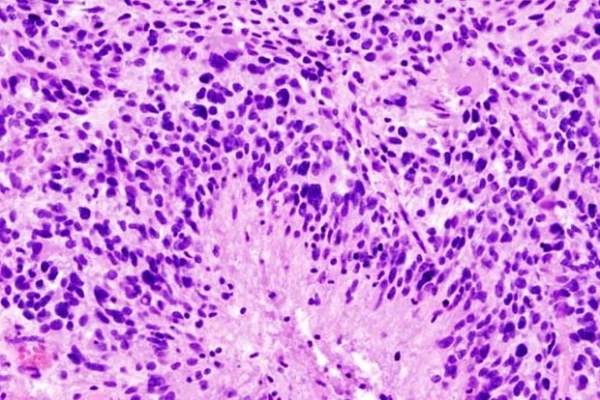
Scientists from Albert Einstein College of Medicine showed that glioblastoma — the most aggressive type of brain cancer — affects not only the brain but also the bones of the skull.
A study published in Nature Neuroscience (NN) revealed that the tumor destroys cranial sutures, alters the composition of bone marrow, and disrupts the immune system's function.
Experiments on mice and analysis of patient images showed that glioblastoma causes thinning of bones and expansion of channels between the skull and the brain. Inflammatory cells from the bone marrow rush to the tumor through these channels, making it more aggressive and resistant to treatment.
Scientists recorded a serious imbalance of immune cells: the number of inflammatory neutrophils increases, while protective B cells nearly disappear. This may explain why traditional therapy methods focused solely on the brain are proving to be ineffective.
Attempts to stop bone destruction using osteoporosis medications led to an unexpected effect — in one case, the tumor grew faster, and immunotherapy lost its effectiveness. The authors emphasize that glioblastoma should be considered a systemic disease, and new approaches to its treatment must take into account changes in the bones and immune system.















Leave a comment