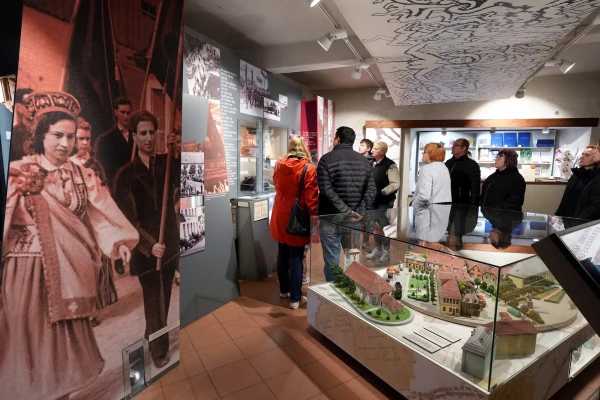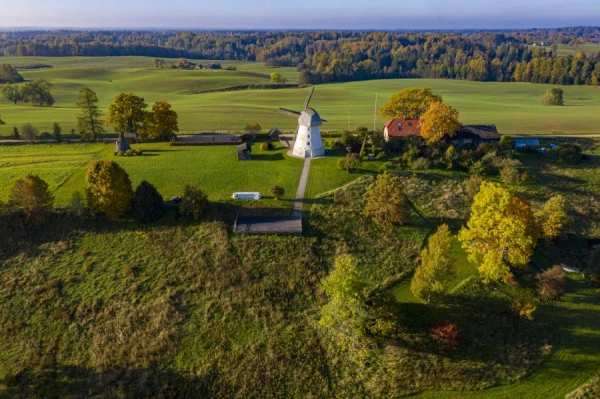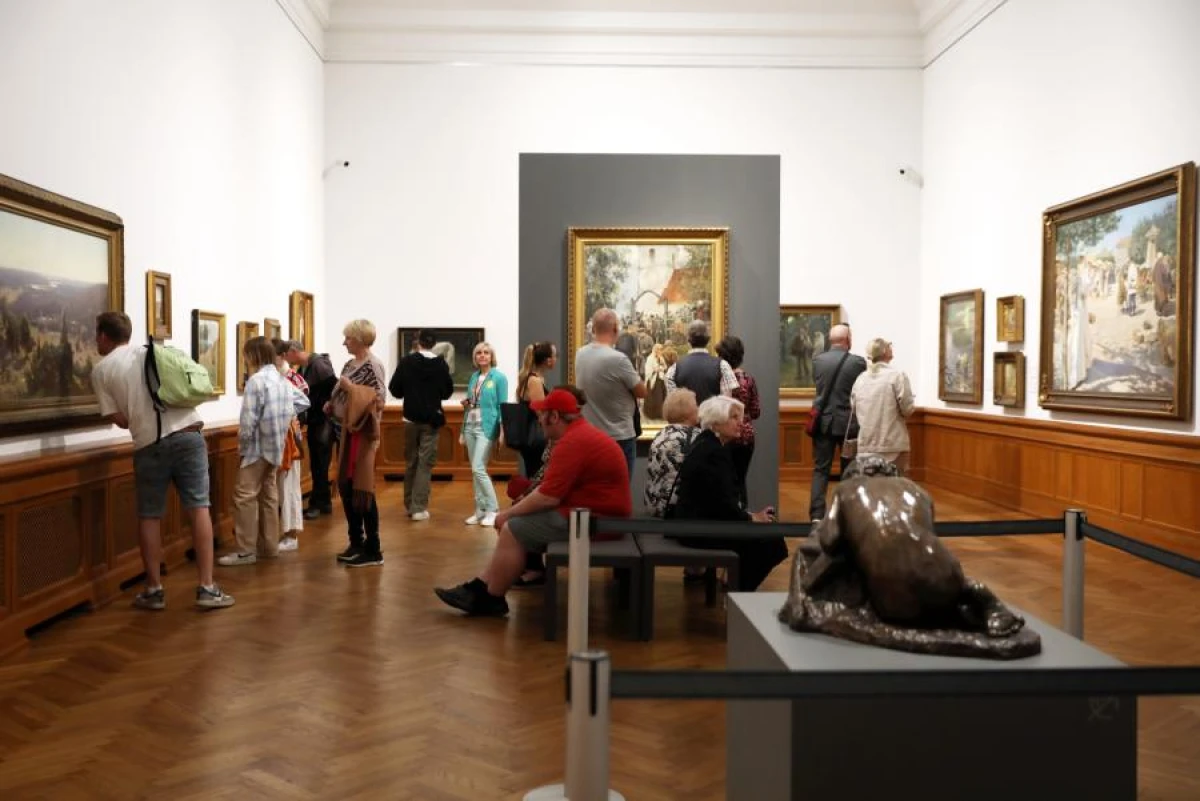
The recent Museum Night in Latvia once again proved that for the sake of art, Latvians are willing to stay awake until dawn. And although state museums noticed a slight decline in activity this year, the overall attendance figures are breaking records thanks to other cultural spaces.
The main favorite among the public outside the capital was the Rothko Museum in Daugavpils, while in Riga, the Military Museum maintained its leadership. We tell you where it was crowded that night.
According to the Ministry of Culture, state-accredited museums received more than 148,700 visitors this year. This is less than in previous years (for example, in 2024 there were about 181,000, and in 2023 — more than 203,000). However, the organizers emphasize that the actual scale of the event is at least twice as large. Official statistics only account for traditional museums, while hundreds of thousands of people spent the night in manors, libraries, exhibition halls, and even in the buildings of ministries and state institutions, which also opened their doors for free. A total of more than 260 cultural spaces across the country participated in the event.
The theme of this Museum Night was "Adventures of the Object," and the events in Riga and its surroundings traditionally attracted the most guests — the capital's exhibitions were visited by 56,131 people. Among the Riga locations, the most popular was the Latvian Military Museum, which welcomed 7,021 guests.
In the regions of Latvia, cultural life was also actively thriving: 172 venues were operating. The true triumph of the night was the Rothko Museum in Daugavpils — it set an absolute record for the year, gathering 10,850 visitors. In the regions, the leadership in the overall standings was distributed as follows: Kurzeme recorded nearly 37,500 visits, Vidzeme about 19,000 (where the main attraction was the Valmiera Museum with 6,230 guests), Zemgale just over 18,000, and Latgale nearly 18,000 people.
This year's Museum Night showed that the format of the event is changing. Residents of Latvia are increasingly choosing not only traditional museum halls for their night walks but also alternative spaces, turning the international initiative into a large-scale celebration of communication and culture. By the way, Latvia has been celebrating this day since 1978, and the tradition itself originated in France and has gradually become a great reason to discover places that many simply do not have time to visit on regular days.