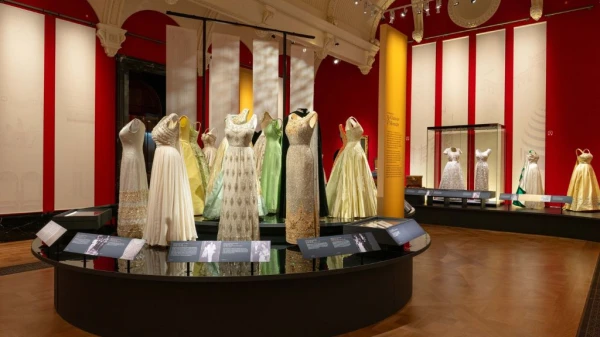
A large exhibition titled "Queen Elizabeth II: Her Life in Style" is taking place at the Royal Gallery of Buckingham Palace, marking the 100th anniversary of the birth of British Queen Elizabeth II. It will run until October 18, 2026.
In a world where political boundaries and social ideals changed with kaleidoscopic speed, the wardrobe of British Queen Elizabeth II remained one of the few unchanging symbols of stability. A new exhibition dedicated to the life and style of the longest-reigning monarch in British history opens the doors to a world where each piece of clothing was not just a decorative element, but a carefully considered tool of statecraft. Visitors to the exhibition are given a rare opportunity to see not only the splendor of royal regalia but also the very history of the 20th and 21st centuries, told through the fabrics, silhouettes, and accessories that accompanied the queen during the most iconic moments of her seventy-year reign.
The exhibition is structured as a chronological journey, allowing one to trace how fashion changed from the post-war period to the digital age. The outfits displayed on mannequins evoke memories of iconic images: from the strict, distinctly elegant suits of the 1950s, reflecting the spirit of Britain's recovery, to the more relaxed and colorful looks of recent decades. Each dress, each hat presented here was created by the best tailors in the country, who knew their work would be closely scrutinized by millions of eyes. This is not just fashion; it is a visual chronicle where the style of a sleeve or the length of a hem could become a topic of discussion in the global press.
Particular attention at the exhibition is given to the queen's "rainbow" style, which became her trademark. Elizabeth II deliberately chose bright, saturated colors—fuchsia, canary yellow, sky blue—so that even in the densest crowd, her subjects could spot their monarch. This conscious choice turned her into a living landmark at any official event. The curators of the exhibition note that behind this external brightness lay a deep pragmatism: the queen always remembered that she needed to be visible to those who came to greet her, sometimes from afar. The exhibition reveals the secrets of this strategy, showing how color helped her build an emotional connection with people around the world.
However, Elizabeth II's style was not only a matter of visibility but also of skilled diplomacy. The queen's wardrobe often served as a tool of "soft power." The exhibition features outfits in which she made her historic visits abroad. In the details of embellishments, embroidery, or the use of certain shades, subtle signs of respect for the host country could always be read, whether it was flora symbolizing the nation or the use of local traditional weaving techniques. The brooches that Elizabeth II wore with such care also receive their "moment of glory" here, telling stories of gifts from leaders of other states and family heirlooms passed down through generations.
The exhibition offers the viewer not only aesthetic pleasure but also a sense of remarkable closeness to history. Looking at the gloves she wore or the recognizable hats that became an integral part of her image, visitors begin to see in the queen not just a symbol of power but a living person. This is a story of discipline, a sense of duty, and the incredible responsibility that demanded perfection from her in every detail. The collection reminds us that Elizabeth II was a woman who spent her life in the spotlight while remaining true to herself, turning her public presence into a true art form, understandable to all, regardless of language and culture.