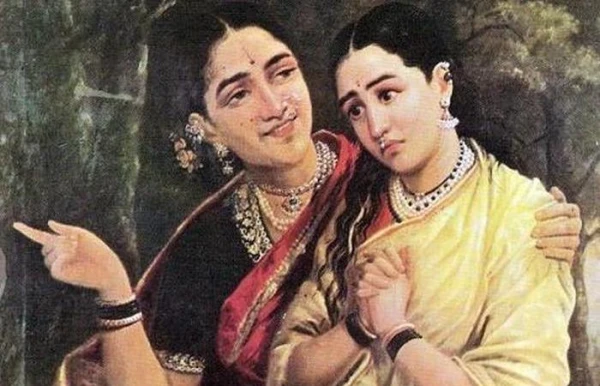
Indian painting has made a significant breakthrough on the international art scene. The painting by the legendary artist Raja Ravi Varma was sold at auction in Mumbai for a record €15.9 million — the highest price ever paid for a work of Indian art. This event has become not just a loud deal, but a landmark moment for the entire art market, which is increasingly reassessing the cultural heritage of Asian countries.
The Excitement Surrounding a Rare Masterpiece
The sold work is a large canvas dedicated to one of the key episodes of the ancient Indian epic "Mahabharata." For many years, the painting was in a private collection and was hardly exhibited, which only fueled the interest of collectors. The auction turned into a tense standoff between buyers from different countries — bids rapidly increased, and the final price nearly doubled the preliminary estimates of experts. This result confirmed that Varma's works have long transcended regional interest and have become the target of a global hunt.
The Artist Who Bridged East and West
Raja Ravi Varma, who worked at the turn of the 19th and 20th centuries, is considered a key figure in the history of Indian art. He was the first to depict mythological heroes and gods in a realistic manner, using European artistic techniques — perspective, chiaroscuro, and oil painting. His style became a bridge between traditional Indian culture and the Western academic school, and his works became a symbol of a new artistic language.
Why This Sale Is More Important Than It Seems
The record-breaking deal has sent a signal to the entire market: interest in "non-European" art is rapidly growing. Experts note that such results are particularly indicative against the backdrop of economic instability — collectors are increasingly viewing artworks as reliable assets. For India, this is also a matter of cultural status: the local art market has firmly established itself at the level of leading global auction houses.
A New Phase for Global Collecting
It is expected that Varma's record will trigger a chain reaction: the value of works by his contemporaries and followers will rise, and interest in Indian classical art will become a sustainable trend. The painting itself, according to forecasts, will either remain in India or join the collection of one of the largest museums in the world. In any case, it has already entered history — as proof that the cultural heritage of the East is no longer on the periphery of the global art market.