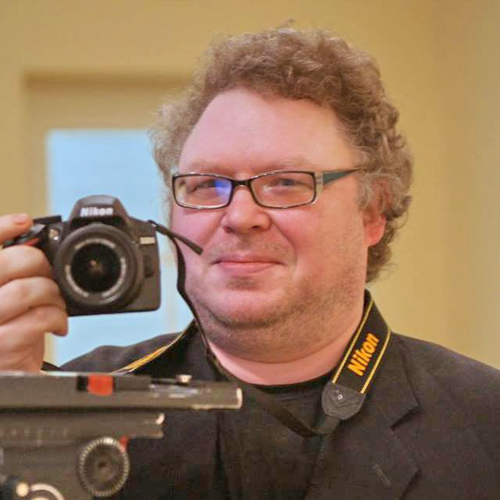
The end of winter turned out to be mournful. First, the photo artist (and simply artist) Roman Korovin passed away at the age of only 52. Following him into eternity was the sculptor Viktoria Pelše, a mighty personality who recently celebrated her 89th birthday.
“We Will Die Together”
About a year ago, in May, Roman was awarded the most prestigious prize in Latvia in the field of visual arts – the Purvītis Prize. This statuette and a monetary reward of 28,500 euros before taxes were awarded every two years for nearly twenty years by the patron Jānis Zuzāns. Roman turned out to be the last recipient of this award. Zuzāns decided to stop distributing the prizes.
The international jury awarded Roman for the exhibition “We Will Die Together,” which took place at the Mark Rothko Art Centre in Daugavpils. The jury described it as “holistic, convincing, and deeply resonant, where humor, joy, and sadness coexist.”
The sadness is clear – Roman had a difficult farewell with his beloved, hope, and... another year of hard life.
He was already seriously ill, could not speak, and moved in a wheelchair. Fortunately, the creativity of this truly genius (as recognized by many) master was appreciated. Talent is understandable; it is hitting a target that everyone can see. Genius, according to experts, is the ability to hit a target that no one can see. Roman had that ability.
What Was in That Letter?
After his departure, one looks even more closely at his works (in recent years he painted miniatures) and sees such amazing details in these small works.
Diptych: a guy lies in a field, goes to the post office, returns, lies down again. It seems he is sunbathing, everything is fine. But what was in that letter? Who was it addressed to? And what is the true mood of the hero in the painting, in which a careful eye could trace the obvious autobiographical moments of Roman?
Roman Korovin graduated from the graphics department of the Latvian Academy of Arts and participated in exhibitions since 1991. His works were exhibited in Germany, Greece, Italy, Latvia, Lithuania, Russia, the USA, France, and Estonia. He participated in the parallel program of the 56th Venice Biennale “Ornamentalism. Contemporary Art of Latvia. Purvītis Prize.” He actively collaborated with the Riga creative association “Orbīta,” which published his books. He was a multiple laureate of the annual photography award. In recent years, he was already recognized as a classic, despite his relatively “young” age (45-50 years). It is gratifying that, even at the end of a bright life, the author was able to see his triumph.
Roman was commemorated in the Orthodox Church in Sarkandaugava, after which he found his final earthly resting place at the First Forest Cemetery in Riga.
Mighty
A few days later, nearby, at the most prestigious cemetery in Latvia - Rainis - the outstanding sculptor Viktoria Pelše was buried, whom critics characterized very accurately and briefly - “mighty.”

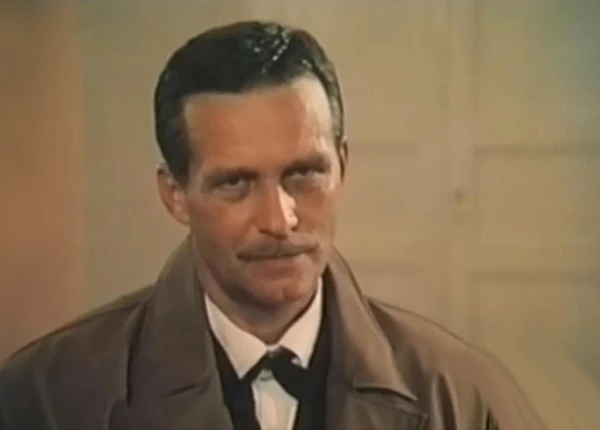
This cemetery is officially closed; it is the resting place of Rainis himself, his wife Aspazija, and famous figures of Latvian culture and politics. However, burials in family graves are permitted. One of the recent individuals laid to rest here was the famous actress Lilita Ozoliņa, Marta from the legendary series “A Long Road in the Dunes.” Now Viktoria lies here as well, whose father was the Latvian art historian and literary scholar, academic Robert Pelše (1880–1955).
“He Knew Too Much!”
A detective novel could be written about Robert himself. He studied in Paris, worked with the great sculptor Auguste Rodin, and was a member of the Social Democratic Party.
After the October Revolution of 1917, he settled in Moscow and lived on the first floor of the famous House on the Embankment, opposite the Kremlin, where the neighbors of the Latvian figure were Soviet military leaders and politicians, half of whom were shot in 1937-38 (for example, Marshal Tukhachevsky).
By the way, Viktoria’s neighbor was Stalin’s daughter, Svetlana.
Robert Pelše was arrested. He served time in Lubyanka, but in 1939, during Beria’s “leniencies,” he was released. “He was very smart; he managed to get out,” Viktoria Robertovna recounted.
Unfortunately, in 1955, the academic was hit by a black car at the corner of what was then Lenin (now Brīvības) and Dzirnavu streets, which sped off towards the Latvian KGB. Robert was on his way to a friend to play chess. Viktoria was convinced until the end that it was a deliberate murder. “He knew too much!” her great daughter once uttered the sacramental phrase.
Visiting the Unknown
The creativity of sculptor Viktoria Pelše began with the monumental animalistic composition “Leopards” in Viestura Park (formerly Tsarsky, also known as Petrovsky), installed in 1967. This was, by the way, her diploma work - and an immediate immortal success (this sculpture is still in the park).
Another of her legendary works also stands in its original place - “Daugava” (1972-1975) at the Riga Passenger Port, which seems to be known by all residents of the Latvian capital.
In 1962, Pelše began her studies at the sculpture department of the State Academy of Arts of the Latvian SSR. At that time, the teachers of the Latvian Academy included such grand classics of Latvian art as the founders of Latvian professional sculpture Theodor Zalkalns (1876-1972), Kārlis Zemdēga (1894-1963; by the way, the monumental tombstone on Rainis’s grave, depicting a youth awakening from sleep, not far from which Viktoria was laid to rest - is his work), as well as Ēmils Melderis (1889-1979), Igor Vasiliev-Penerdži (1940-1997), and the stunning artist Leo Svemps (1897-1975).
Since 1969, Viktoria carried out commissions as a sculptor in the former Art Fund of the Latvian SSR, the applied arts association Māksla, where, by the way, in the sixties she met the genius sculptor Ernst Neizvestny, with whom she frequently visited his Moscow studios until his emigration to the USA in the seventies.
Man and Cosmos
Viktoria’s relief strip “Yermak Conquers Siberia” (1970, copper forging) decorates the Tobolsk railway station in Russia, as well as the facade of the Daugavpils Dairy Plant (1972).
The sculpture “Man and Cosmos” or “Man in the Age of Television and Radio Communication” (1980, together with sculptor Arta Dumpis, copper forging, metal) still adorns the facade of the Ostankino Television Center in Moscow.
Riga residents can see her bas-reliefs “Lions” (1982, shock-absorbing concrete) as decoration for the loggias of a residential building on Brīvības Street in Riga.
In 1997, Viktoria became one of the first citizens of the Republic of Latvia for special merits. Her works, which will outlive us all, are in the Museum of the Union of Latvian Artists, the Latvian National Museum of Art, the Ludwig Museum in Germany, the State Tretyakov Gallery in Moscow, and other museums and private collections.
We express our deep condolences to the relatives, friends, and admirers of the talents of the deceased. Eternal and bright memory!