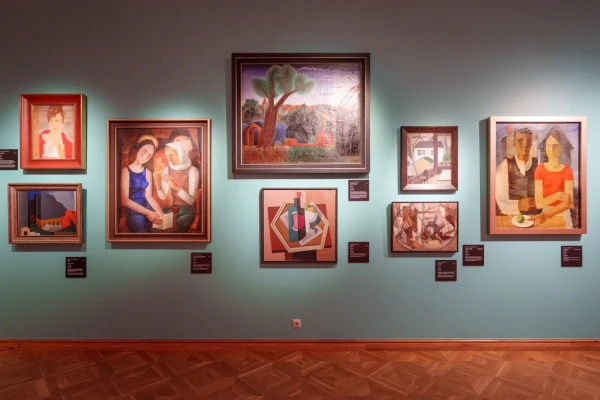
Until April 26, 2026, a large exhibition 'Classical Modernism in Latvia. Painting. Graphics (1911–1930)' will be held in the main exhibition hall of the Liepaja Museum.
The exhibition 'Classical Modernism in Latvia. Painting. Graphics (1911–1930)', created in collaboration with the Zuzeum Art Museum and the Latvian National Museum of Art, sheds light on one of the most significant stages in the history of Latvian art – a time when there was a substantial paradigm shift in Latvian art.
The exhibition brings together works by 45 outstanding Latvian artists from the collections of Zuzeum and the Latvian National Museum of Art, allowing visitors to see the penetration of modernist ideas into Latvian art from 1911 to 1930.
This era is reflected in the works of Aleksandra Beļcova, Gederts Eliass, Jāzeps Grosvalds, Jānis Kalmīte, Ludolfs Liberts, Kārlis Miesnieks, Oto Skulme, Uģis Skulme, Niklāvs Strunke, Romans Suta, Leo Svemp, Erasts Šveics, Valdemārs Tone, Konrāds Ubans, Johann Walter, and Hilda Vīke, which vividly reveal the stylistic diversity of modernism and the individual handwriting of each artist.
The works presented at the exhibition are grouped by themes, reflecting the stylistic directions of moderate modernism, cubism, expressionism, and fauvism, as well as new practicality.
The development of modernism in Latvia occurred with some delay compared to Western Europe, which was due not only to complex historical circumstances but also to the peculiarities of Latvian culture and mentality.
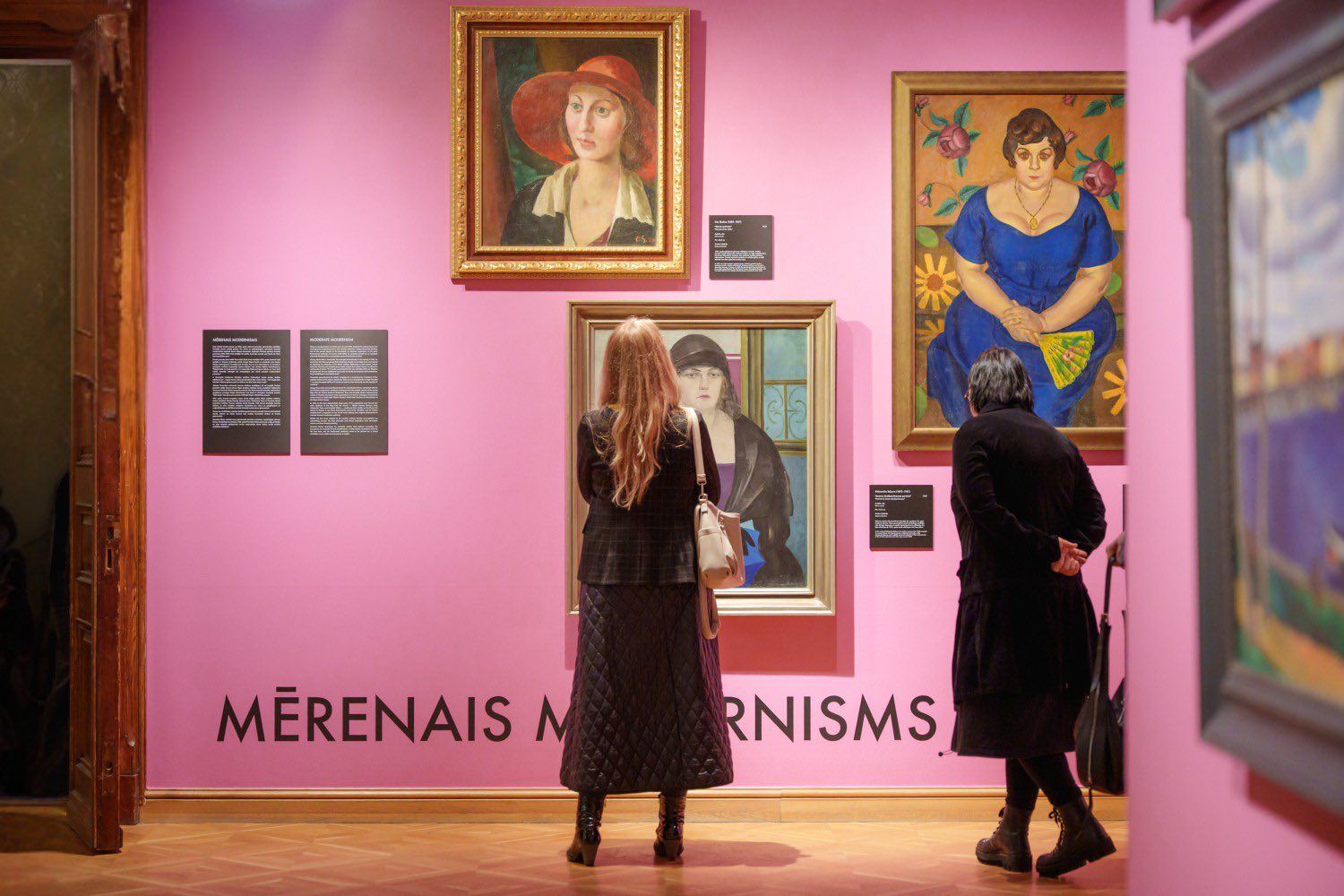
The restraint of the northern character, rural mentality, and lack of deep traditions in visual arts hindered reckless passion for radical experiments in form. However, this lag did not turn into backwardness – artistic ideas that originated in Europe were purposefully mastered and interpreted through the lens of local experience. When a new generation born around 1890 entered the art scene, the development of painting shifted towards the creative stream of modernism, and modernism in Latvia evolved not as a mechanical borrowing but as a conscious intellectual and aesthetic project, organically intertwined with the experiences of World War I, the fate of refugees, and the creation of a new state.