
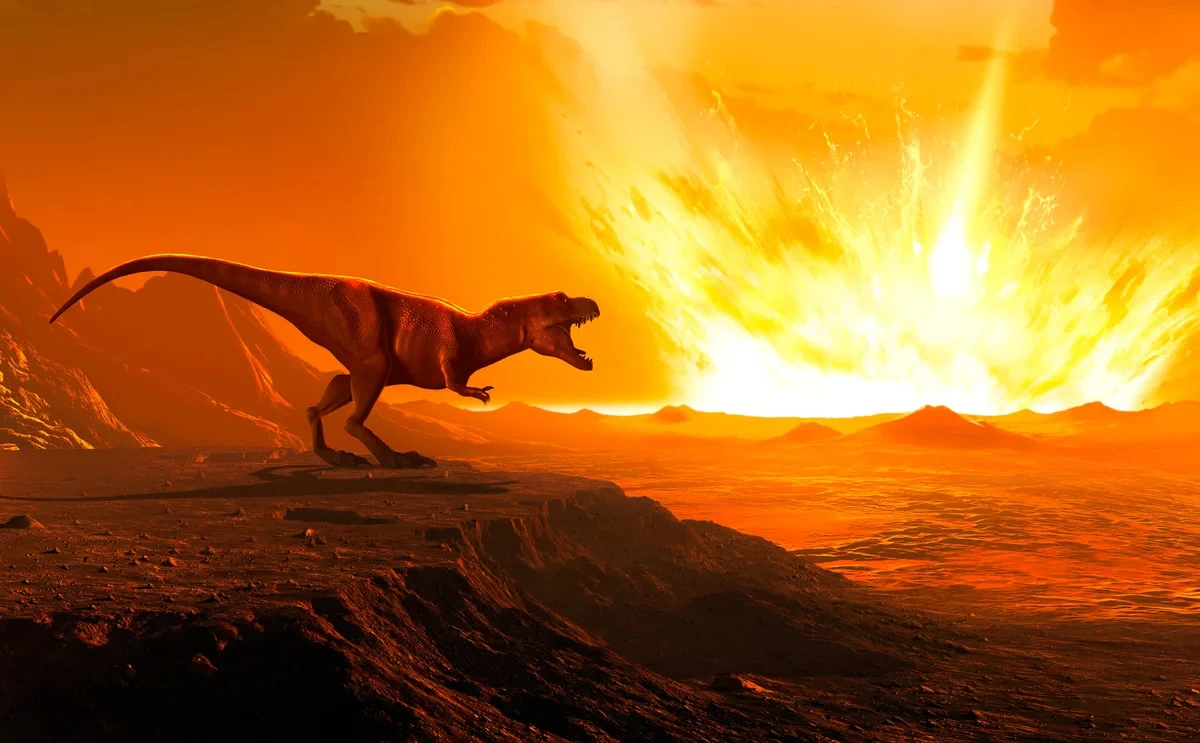
The largest alpha predators and herbivores, from Tyrannosaurus rex to Triceratops and the marine mosasaur, were doomed.
About 66 million years ago, a giant asteroid collided with Earth. The cataclysm wiped out 75% of all living species on the planet, including the overwhelming majority of dinosaurs. However, many species, including birds, turtles, and mammals, managed to survive. The portal livescience.com explained how and what could have influenced their survival.
It turns out that size plays a key role in survival. The largest alpha predators and herbivores on the planet, from Tyrannosaurus rex to Triceratops and the marine mosasaur, were doomed from the moment the asteroid struck Earth. Their gigantic sizes meant that they were more likely to be harmed in the initial explosion. They had nowhere to hide from the devastating consequences of the asteroid, not to mention that such large animals require equally large amounts of food to survive.
But the connection between size and the likelihood of survival is not too surprising. Obviously, based on correlation, small animals capable of burrowing underground would have had an easier time surviving such a cataclysm. Small lizards and mammals, at the time no bigger than a badger, would have found it easier to seek shelter. Other small animals, which do not require much food, such as turtles and fish, were sheltered from the explosion by water.
The feathered group that led to the emergence of modern birds likely survived due to their small size and powerful wings, which helped them flee from dangerous situations. Additionally, their young grow quickly — they start foraging for food sooner, which reduces the burden on the parents.
Ultimately, these nuances led to a global shift in the size of animals on Earth. On land, most of the largest surviving species were no bigger than domestic cats, while in the water, they were about the size of a modern shark.
Diet was another important factor. Herbivores and those that preyed on herbivores suffered more than others, as the Sun was blocked for 10 years. Even those with compact sizes, like certain species of lizards and turtles, went extinct because their diet was too dependent on photosynthesizing plants.
Aquatic ecosystems were somewhat better protected from the asteroid's shockwave, especially in the deep ocean and freshwater bodies. But as photosynthesizing plankton went extinct due to a lack of sunlight, certain food chains collapsed, and large species starved. Those that fed on carrion and organic detritus had better chances of survival. Among the most resilient species were marine sponges, sharks of the genus Carcharias, and mollusks, including those that later evolved into modern nautiluses.
Seed-eating birds and insectivorous species, such as the tree-dwelling primate Purgatorius janisae, fared better during the cataclysm because their food sources were not destroyed by extreme temperature fluctuations and a lack of sunlight.
The most popular theory suggests that species with more versatile diets have increased chances of survival in the event of a radical climate change. For example, the small mammal Purgatorius coracis survived the mass extinction because members of this species fed on insects, fruits, and seeds. Some predatory species simply got lucky that their prey also managed to find a way out of the crisis.
Nevertheless, science still has questions about what qualities and adaptations allowed certain species to survive the mass extinction. For instance, we do not know why certain evolutionary advantages helped some animals but not others. For example, many current species of bivalve mollusks feed on aquatic microorganisms that require sunlight. But among the bivalves that survived the asteroid impact, this factor did not significantly affect survival. Another example: nocturnal lizards that survived the impact nearly at the epicenter reproduce with small litters, which contradicts the hypothesis about the importance of high reproductive potential.











Leave a comment