
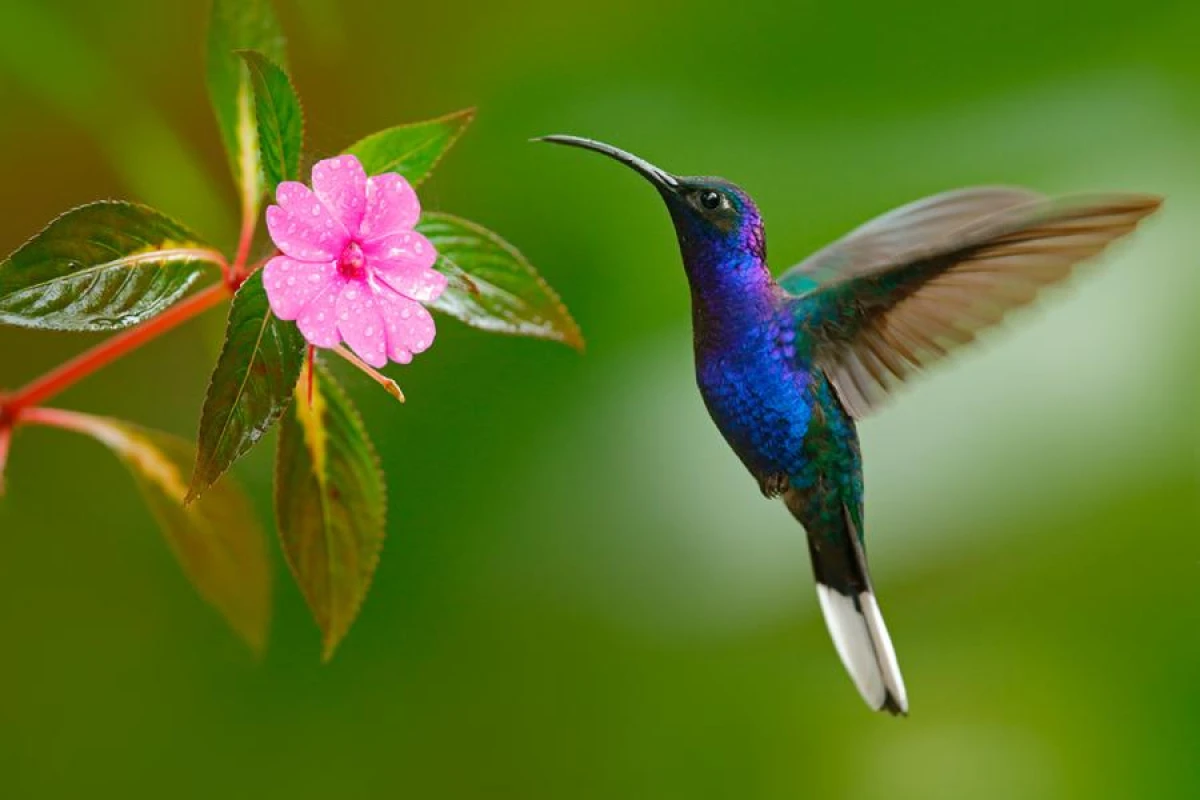
How hummingbirds cope with changes in their habitat.
Climate change sometimes forces species to rise to new heights. Ornithologists from the United States decided to find out whether birds can adapt to life at high altitudes. The study focused on the Anna's hummingbird, a species that has faced the need to 'relocate' to higher levels of the biosphere multiple times.
Anna's hummingbirds have repeatedly sought new habitats due to rising temperatures in their usual areas. They are currently found at altitudes ranging from 10 to 2800 meters. To determine the limits of their capabilities, scientists raised 26 individuals 1200 meters above their usual habitat.
At high altitudes, hummingbirds face two main problems: cold and thin air. Scientists measured the birds' metabolic rate, their response to temperature, and oxygen deficiency. The study utilized special funnels with syrup that allowed for the assessment of oxygen consumption during feeding.
During sleep, the level of carbon dioxide in the hummingbirds was also measured, which helps evaluate metabolism. Due to the cold, the birds entered a state of torpor for 87.5% of the night, which is more than usual. This allowed them to conserve energy by slowing their metabolism by 37%.
Such changes were observed in all individuals, regardless of their original altitude. However, birds that initially lived at higher altitudes showed an increase in heart size, which scientists believe is related to the need for improved blood circulation in conditions of oxygen deficiency.
The results of the study showed that hummingbirds, typically known for their activity, significantly reduced their activity, flew less frequently, and spent less time in flight. Despite the species' ability to adapt to challenging conditions, the cold and low atmospheric pressure at high altitudes may prove too difficult for them, the authors of the study believe.
Scientists suggest that adaptation may occur very slowly and gradually, or hummingbirds may choose another path in search of a new home—moving northward, changing latitude rather than altitude.












Leave a comment