
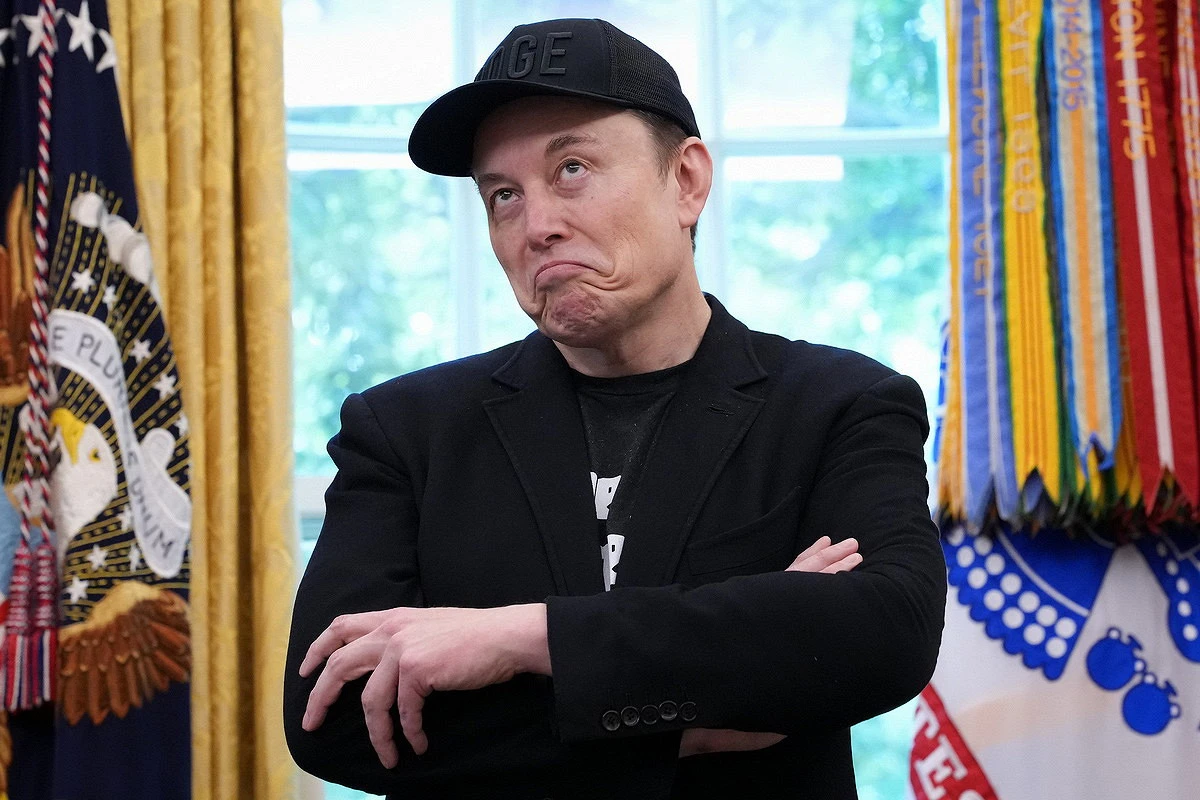
Elon Musk intends to launch up to a million satellites into orbit for artificial intelligence operations. However, several specialists warn that the grand idea may turn out to be not only technically complex but also require colossal costs that could jeopardize even SpaceX.
Elon Musk has presented another ambitious project related to the development of artificial intelligence. According to his plan, by 2028, a giant network of satellites should appear in orbit, capable of providing computational power for AI systems around the world.
The founder of SpaceX views space as a promising platform for data centers. Today, the company already operates about 10,000 Starlink satellites, but the new project envisions increasing the constellation by hundreds of times.
Experts estimate that if the cost of one satellite is around $2 million, the implementation of the program could require up to $2 trillion in investments. This amount is comparable to the projected market value of SpaceX after a potential IPO.
Why Scientists Are Skeptical
Renowned engineer and rocket technology developer Robert Zubrin, who has known Musk for over two decades, considers the project overly optimistic.
In his opinion, creating an orbital network of a million satellites for artificial intelligence computing seems more like a fantastic idea than a realistic business plan.
Experts note that serious questions arise not only about the cost of the program but also about its technical implementation. To achieve the stated goals, SpaceX would have to significantly increase the number of launches. Musk has previously mentioned the possibility of launching Starship ships almost every hour, but today the company only conducts a few launches per week.
Space Currently Lags Behind Earth
Specialists also point out the economic aspect of the issue. Energy production in space remains significantly more expensive than on Earth.
According to analysts, the cost of obtaining one kilowatt of energy in orbit is tens of times higher than the expenses of terrestrial data centers using solar panels or gas generators.
Musk himself holds the opposite view and believes that in the coming years, space computing could become more economically viable than terrestrial computing.
However, research conducted by specialists from Google Project Suncatcher shows more cautious forecasts. According to their estimates, space computing platforms will not be able to compete with terrestrial infrastructure until at least the middle of the next decade.
Betting on Starship and Investor Interest
The successful development of the Starship rocket is crucial for the project's implementation. Only a fully reusable system can significantly reduce the cost of delivering cargo to orbit.
However, the latest Starship tests have been accompanied by technical problems, leading experts to doubt the feasibility of achieving such ambitious timelines.
Some analysts believe that the bold statements about space AI may also be linked to Musk's future financial plans. Interest in artificial intelligence remains one of the highest in the market today, and large-scale projects can attract the attention of potential investors.
For now, the idea of placing a million satellites in orbit for artificial intelligence needs appears more like a long-term concept than a project ready for implementation in the coming years. Despite Elon Musk's confidence, most experts believe that realizing such a vision will require not only a technological breakthrough but also unprecedented financial resources. Therefore, the future of space data centers remains a subject of lively discussions rather than a guaranteed reality.












Leave a comment