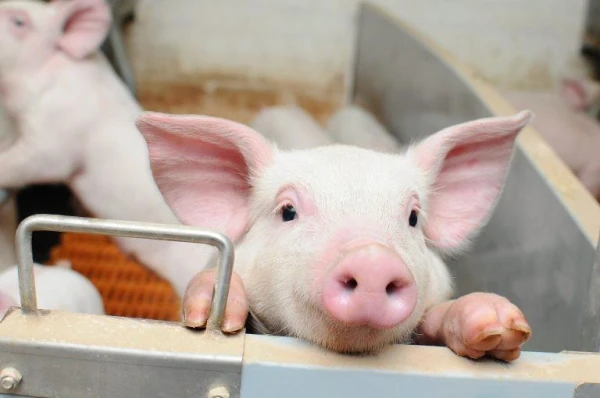
Experts from Texas Tech University believe that adding copper balls to feed may help improve the intestinal health of pigs and subsequently reduce the level of pathogenic microorganisms in the environment.
According to an article published in the journal Microbiology Spectrum, copper has natural antimicrobial properties. In this regard, scientists decided to investigate the possibility of using copper to improve the intestinal condition of pigs, considering that these animals can absorb certain metals in significant amounts without harm to their health. According to the researchers, copper is not absorbed in the stomach and remains in the gastrointestinal tract of pigs for a long time.
The experiment lasted three weeks. During the study, 24 female and 24 male six-month-old pigs were selected and divided into two equal groups. One of the groups received feed with added copper balls during the second week of the experiment. Throughout all three weeks, the scientists analyzed the composition of the pigs' feces, measuring the copper level and conducting 16S rRNA sequencing to identify the species of microorganisms residing in the animals' intestines.
The family Enterobacteriaceae was chosen as an indicator of changes in the intestinal microbiome, which includes pathogens of various intestinal infections (such as salmonella and Escherichia coli), as well as a number of lactic acid bacteria that contribute to the normal functioning of the pigs' intestines.
The results showed that the copper level in the feces of pigs from the experimental group was approximately 20 times higher than in the control group. Moreover, after the cessation of the supplements, the copper level in the feces quickly returned to baseline values.
Microbiome analysis showed that the addition of copper led to an increase in the number of Enterobacteriaceae and a decrease in the level of lactic acid bacteria, which was unexpected. The scientists believe that the reason is that after the reduction of lactic acid bacteria, Enterobacteriaceae had more opportunities to proliferate in the intestines.
The next step in the research will be to refine the technology that allows for targeted influence on the presence of specific pathogenic microorganisms in the intestines of pigs. According to the scientists, the results of the current study demonstrated that this is quite possible.