
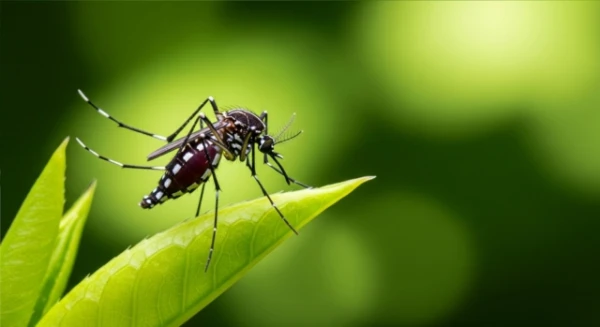
Researchers at Columbia University have discovered six clusters of cells in the gut of the female Aedes aegypti mosquito that suppress the desire to bite humans after a blood meal.
The NPYLR7 receptor in these cells, rather than in the brain, converts nutrients from the blood into yolk for egg development.
When the gene was turned off, mosquitoes consumed blood and laid eggs of normal size; however, the hatchability decreased, and the protein level in the ovaries diminished. The mutants lost the ability to absorb food when fed diluted nutrients, while wild females reduced their clutch from 82 to 28 eggs.
The rectal cells interact with neighboring nerves, releasing rhiamide and increasing calcium levels in response to amino acids. Electron microscopy showed that normal females form signaling vesicles after feeding, whereas mutants do not. In mammals, intestinal sensory cells form synapses with nerves and transmit nutrient signals within milliseconds, indicating an ancient evolutionary link between the gut and appetite control.
New compounds that activate NPYLR7 suppress blood-feeding at doses 100 times lower than older molecules. The intestinal target is more accessible than the brain, paving the way for the development of baits that alter behavior.
It is unknown whether the same mechanism operates in other blood-sucking species. If scientists can intervene in this signaling chain from the outside, it could become a practical way to prevent mosquito bites without waiting for evolutionary changes.













Leave a comment