
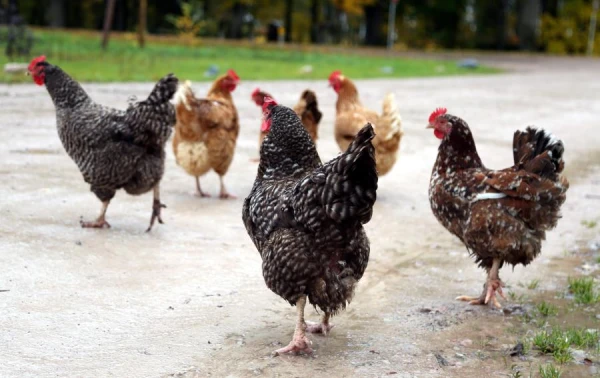
The question of what came first — the chicken or the egg — has intrigued scientists around the world for many years. However, this is not just a logical puzzle, but a complex historical and biological problem. Currently, there are more questions than answers. For example, when exactly were chickens domesticated and where did this happen? The ancestors of modern domestic chickens are considered to be wild bankiv chickens, which still inhabit the jungles of Southeast Asia. These birds successfully interbreed with their domesticated relatives.
Evolutionary genetic studies suggest that chickens were domesticated about 9,500 years ago, but with a large margin of error — plus or minus three thousand years, which is a significant time span in the context of human history. Archaeology could clarify the situation, but it is not so simple here either. Fragments of chicken bones often do not preserve well, and they can easily be confused with the bones of other birds. Additionally, the preservation of DNA in the humid and warm climate of Southeast Asia leaves much to be desired. In this regard, chicken archaeologists can only envy anthropologists who extract DNA from the teeth of our ancestors who lived tens and even hundreds of thousands of years ago. However, chickens, even wild ones, unfortunately, do not have teeth… But they do have eggs!
Eggs have shells, and within the shells are proteins. Modern methods allow for the precise determination of species based on proteins extracted from biological specimens. Although it may be difficult to distinguish between a domestic chicken and a wild one, it is quite possible to differentiate it from a pheasant, goose, or other birds that once interacted with humans. As researchers report in a recent article in the journal Nature, they managed to analyze shell samples collected over seven years during archaeological excavations at 12 different sites in Central Asia and isolate those that belonged specifically to chickens.
Why are chicken eggs so important, rather than the chickens themselves? The fact is that wild hens typically lay no more than six eggs and do so only once a year. Keeping such a voracious bird for the sake of a modest omelet once a year probably did not appeal to everyone. Therefore, the first domestication of chickens is often associated with their use not as a source of food, but as fighting and decorative birds. Roosters with bright plumage and corresponding temperaments were well-suited for spectacular events in the ancient world. If chicken shell fragments begin to consistently appear in archaeological layers from a certain time, this may indicate the loss of seasonality in egg-laying among domestic chickens and the resulting “egg revolution” in ancient cuisine.
It was found that in all 12 studied areas of major ancient settlements and cities, chicken shells are absent in archaeological layers until the fourth century BC, and after that, they are consistently present up to the Middle Ages.
The authors of the study conclude that it is likely from this period that domestic chickens began to acquire significant economic importance for humans, remaining to this day one of the main sources of protein for humanity. Therefore, returning to the initial question, it can be confidently said that humans first had the chicken, and only later, relatively recently in historical terms, did eggs become a regular occurrence. Or did the eggs make the chicken a chicken? Perhaps we still have much to explore regarding this question...














Leave a comment