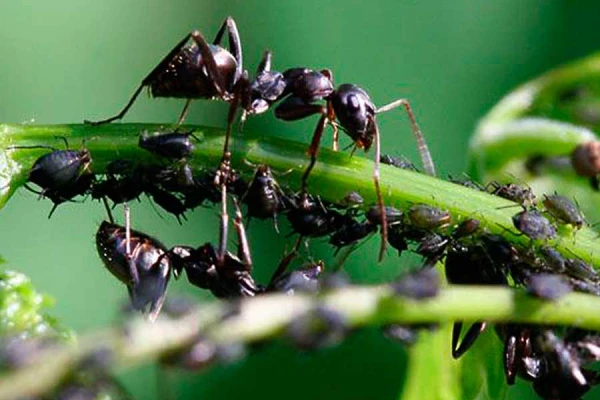
The first thing an aphid does after its appearance is pierce the stem or leaf of a plant with its sharp proboscis, sucking out the sap, while excess is excreted through two tubes located at the bottom of its abdomen in the form of droplets enriched with sugar.
This sweet syrup, known as “ant milk,” plays an important role in the nutrition of ants. Some species of aphids can secrete a drop of syrup every minute. For example, the average daily “milking” of a linden aphid can reach 25 mg of milk. Between 15% and 20% of the worker ants in a colony are involved in collecting this valuable product.
Aphids that live in symbiosis with ants have learned to expel the sweet liquid directly into the mouth of the ant after the ant massages their abdomen with its antennae. During the summer, only the black ants of one colony, which numbers around 20,000 individuals, collect up to 5 liters of sweet milk. If the proliferating aphids become crowded in their old location, the ants carefully relocate them to new places. Some species of ants build shelters for their “wards” by coating the areas where the aphids gather with soil and wood dust.
Inside such homes, the entrances and exits are controlled by guard ants, protecting the aphids from bad weather and attacks by other insects. However, if an enemy does manage to break down the walls, the herding ants first pick up the clumsy aphids and hide them in a safe place. Aphids that inhabit the roots of trees are even more dependent on ants than their terrestrial relatives. Ants do all the heavy work for them, tunneling to the roots, caring for their eggs, and “quartering” the newly hatched young on the roots of unoccupied trees.