A Brit encountered it on the beach.
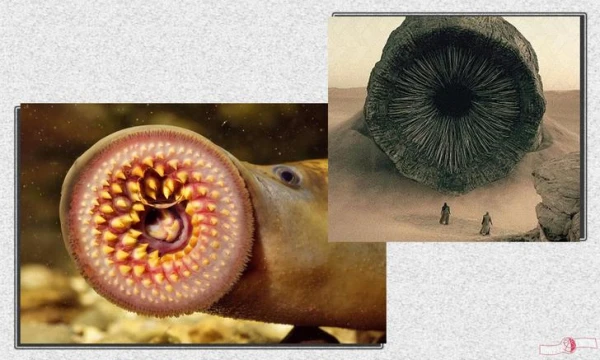
Englishman Will Miles was walking on the beach in Devon after work when he stumbled upon a strange creature about 80 centimeters long. “It looked like a huge leech with a sucker covered in sharp teeth pointing inward,” he described his unusual companion, which was lounging on the beach in the spotlight. Will took a picture of this creature and posted it in a naturalists' group on social media, hoping to get an answer: is this the sandworm from 'Dune' named Shai-Hulud.
Some community members indeed noted the striking resemblance to the fictional sandworm, anticipating the appearance of Timothée Chalamet nearby and speculating on what inspired Frank Herbert to write his famous science fiction novel. However, for most who saw the shocking image, it became more of a nightmare than a science fiction element.
Ultimately, the post caught the attention of wildlife experts, including marine biologist Jarko Havermans. In 2023, he made headlines as the first person in six years to discover a sea lamprey on Texel Island in the province of North Holland in the Netherlands and described its life cycles.
According to Havermans, for five years, lampreys inhabit riverbeds, filtering debris, and then, upon maturing, migrate to the sea, becoming parasites: they attach themselves to large fish and whales, sucking their blood until the victim dies. To reproduce, lampreys return to rivers.
Previously, these “vampires” were widespread in the UK, but now they are becoming increasingly rare. The decline in their numbers is attributed to poor water quality and artificial barriers in rivers where predators breed.
It would be interesting to observe a meeting between a lamprey and a sandworm. It could become an epic battle. And while we wait for their encounter, we recommend finding out why the new adaptation of 'Dune' is setting trends in the fashion world.