These domestic pets with bright fur and spotted coloration inherited their qualities not from wild ancestors.
Bengal cats, or Bengals, were bred in the 1960s as a result of crossing domestic cats (Felis catus) and wild Bengal cats (Prionailurus bengalensis), which inhabit South and East Asia. The breed was officially recognized only in 1986, and since then, Bengals, with their exotic appearance, have become one of the most popular domestic cats.
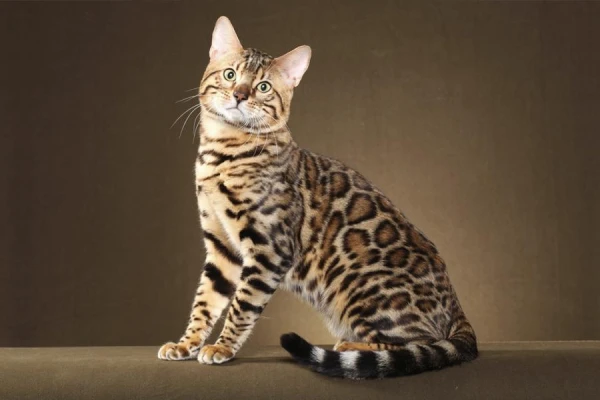
Today, representatives of this breed are known for their dense, shiny, and shimmering fur, as well as their 'wild' coloration, reminiscent of the coat of leopards, jaguars, or ocelots — contrasting black or brown spots on a golden-orange background. It was previously believed that the beauty of their fur and coloration was due to the legacy of their wild ancestors; however, geneticists from the USA and Switzerland have established that this is not the case.
In a study whose results were published in the journal Current Biology, scientists collected DNA samples from about three thousand Bengals over several years and fully sequenced the genomes of nearly a thousand of them. It turned out that the proportion of genes inherited from wild cats is only 3.48%. Moreover, none of these genes are associated with the unique appearance of this breed of domestic cats.
The reason for this is the reduced activity of 'wild' genes due to genetic incompatibility that arose from crossing such distant relatives — the last common ancestor of Felis catus and Prionailurus bengalensis lived about 6 million years ago, making their genetic differences more significant than those between humans and chimpanzees.
Nevertheless, when breeding the breed, artificial selection was carried out based on two main criteria: silky, shimmering fur and bright spotted coloration. Both of these characteristics occur, albeit rarely, in domestic cats. As a result of selection, mutations that provide the desired external traits became fixed in the 'domestic' genes. For example, the shiny fur of Bengals is a result of a mutation in the Fgfr2 gene.
Thus, for their beauty, Bengals owe their traits not to wild Bengal cats, but to ordinary domestic pets.