
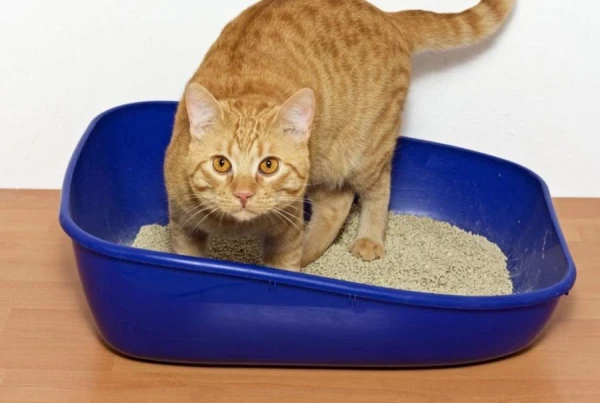
A cat that has been trained to use the litter box may start relieving itself in other places only in rare cases. For example, if the owner accidentally closed the room with the litter box or did not clean it in time. If such behavior has become an isolated incident, there is no cause for concern. However, if the pet regularly relieves itself outside the designated spot, it may indicate problems with the urinary system, gastrointestinal diseases, joint pain, and other ailments. Let's consider the reasons why a cat may exhibit uncleanliness.
A cat that has been familiar with the litter box from an early age may have several reasons for such behavior.
Aversion
This feeling often arises from a negative experience in the past.
The cause of aversion can also be fear. For example, if the cat is comfortably settled in the litter box and a loud noise occurs, such as a neighbor's drill, the pet may become frightened and no longer want to use that spot. However, usually, the "starting signal" for the formation of aversion is internal discomfort that arises when visiting the litter box, such as painful urination or colic.
In older cats, these problems are compounded by joint pain due to arthritis and arthrosis. In such cases, it becomes difficult and unpleasant for the animal to climb into a litter box with high sides. Therefore, at one "beautiful" moment, the pet may decide that it has had enough and start relieving itself on the mat in the hallway.
Established Preference
Imagine the situation: on Friday evening, the owners went to the country for the weekend and left a clean litter box for the cat. On Saturday, the litter box became dirty, and the tidy animal began to look for a suitable place for its toilet. The search led it to the owner's bed — it's soft, clean, and smells nice; in general, it's the perfect place for its business.
Sometimes the cat doesn't make it to the litter box in time and leaves a puddle on the way. After several such incidents, it may decide that relieving itself strictly in the litter box is not so necessary.
Marking
The cat marks the territory of the apartment, objects, and even the owner with its scent to feel safe. It has many ways to do this, as the glands that secrete the smelly substance are located in various parts of the body — around the eyes, on the chin, behind the ears, at the base of the tail, and in the spaces between the toes.
Additionally, cats can mark territory with their feces. Unneutered males mark with a stream, while neutered males and all females mark with a puddle.
Sometimes a cat leaves feces in a visible place. They contain a specific protein, Fel D1, secreted by sebaceous glands. This protein, rather than fur, is the cause of allergies in humans to cats. This protein likely binds the cat's pheromones and helps them persist in the environment. Therefore, piles in an inappropriate place do not necessarily indicate the pet's illness; it may simply be a territorial marking.
What to Do If the Cat Stops Using the Litter Box
First of all, it is advisable to visit a veterinary clinic to rule out illness as the cause of unclean behavior.
Since the pet will never complain to the owner about its health, it would be wise to add an annual check-up to its schedule — for example, before vaccination.
The composition of such a check-up depends on the specific animal's medical history but usually includes general clinical urine and blood tests, as well as a biochemical blood test.
If the cat is urinating in inappropriate places, an ultrasound of the urinary system will be performed, and if it leaves feces everywhere, the gastrointestinal tract will be examined.
For older animals, X-rays may be conducted to rule out arthritis, arthrosis, and other age-related diseases.
If it turns out that the cause of unclean behavior was illness, most likely, after treatment, the problem will resolve itself. However, if the animal has developed an aversion to the litter box or a preference for another spot during the illness, it will require some work after recovery. Let's consider everything in order.
Assessing the Cat's Living Conditions
The ideal conditions for an animal are when it has enough food and water, feels safe, and the owners do not try to overly animate it. In other words, it can be itself — sharpen its claws, hide "prey," find secluded places, and exhibit species-specific behavior.
If any of these freedoms are restricted, the cat may start relieving itself outside the litter box to regain a sense of comfort. Such behavior can be understood, but that does not mean it should be accepted.
Paying Attention to the Litter
Cats usually prefer fine-grained litter without fragrances — it should resemble soil or sand as closely as possible. However, it may happen that the pet experienced severe pain in the litter box, and now everything related to it causes aversion.
In this case, it is worth trying a different type of litter. Absorbent pads can also work as an option.
Eliminating Specific Odors
If a cat has relieved itself on a mat or another absorbent surface once, it will find that spot by smell the next time, even after being treated with disinfectants.
In such cases, enzyme-based products can help. If a chair or sofa has been affected, the product can be injected with a syringe — once it penetrates the thickness of the filling, it will eliminate the odor of the absorbed urine without harming the furniture.
Being Clever
If you place the litter box in the spot the cat has chosen for its toilet, it will likely use it. If so, you can gradually move the litter box in the desired direction until the desired location is reached.
You can also limit the animal's access to the "disapproved" place for relieving itself. It would be good if this room could be locked, but if that is not possible, creativity will be required. For example, you can place a food bowl, scratching post, or any other item that the cat does not associate with a toilet in that spot.
It is possible that as soon as the cat stops relieving itself in one inappropriate place, it will start doing so in another equally inappropriate spot. In that case, you will have to repeat everything from the beginning, but in most cases, one attempt is enough.
Sometimes all of the aforementioned actions may not be sufficient. For example, if we are dealing with anxious, timid pets or if there are multiple cats in the house, and one is bothering the other. In such cases, you can try using pheromone products or antidepressants. However, before giving them, the medicinal support for the pet must be discussed with a veterinarian to avoid harming the animal.












Leave a comment