
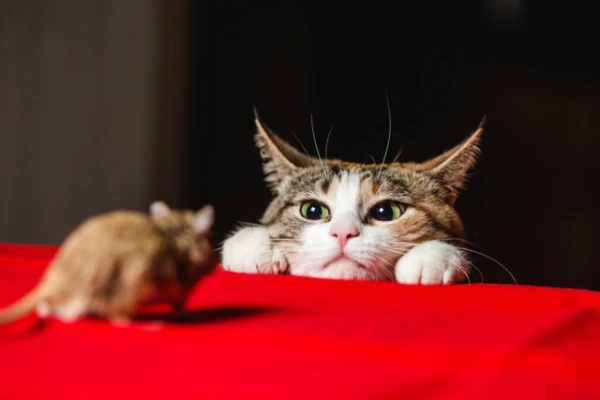
Rob Dunn, a professor of applied ecology at North Carolina State University, suggests viewing the relationship between humans and cats not as domestication in the classical sense, but rather as mutualism that may have shifted towards parasitism over time. In his book "The Call of the Meadowlark," he analyzes the evolution of this connection.
The ancestors of domestic cats — African wildcats — approached humans when they began to engage in agriculture: grain attracted rodents, and cats eagerly fed on them. This was pure mutualism: cats received food, and humans received protection for their stores. The earliest evidence of such symbiosis, including the burial of a cat next to a human in Cyprus 9,500 years ago, indicates a hand-tamed but not yet fully domesticated animal.
Initially, no genetic changes were observed. However, with the growth of cities and the emergence of large granaries, where cats were no longer sufficient for pest control, the practical benefits diminished. In Egyptian art, cats stopped being depicted as hunters — they began to be portrayed under the chairs of noblewomen, often on leashes. This, according to Dunn, marks a shift in role: cats transformed from useful companions into decorative animals, while still receiving significant resources from humans.
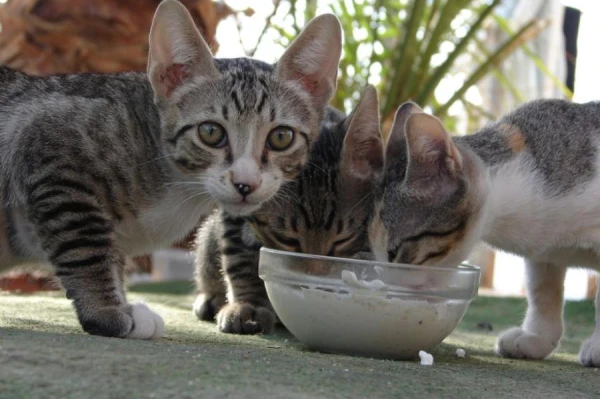
Today, people feed cats billions of calories of meat daily — as much as the residents of a metropolis like New York consume. From an evolutionary perspective, this is no longer partnership but parasitism: the species benefits without providing commensurate benefits.
Cats have become the only predators whose biomass exceeds that of all wild felines combined. They are not revered as gods, nor do they serve humans — they simply live alongside them, on their terms, but according to their own rules.









Leave a comment