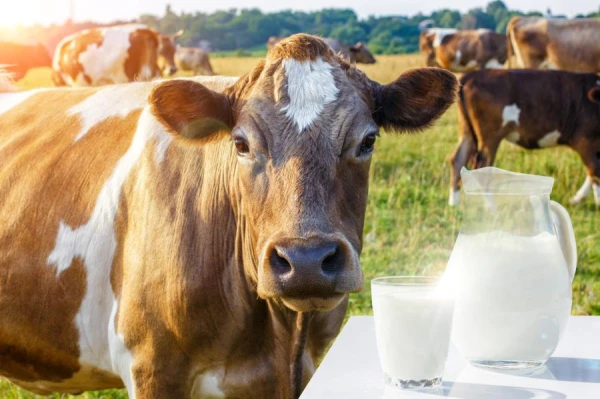
Researchers from the University of British Columbia (Canada) have found that using positive reinforcement methods to train dairy cows not only helps in forming necessary behaviors but also improves their emotional state and overall well-being.
According to researchers, previous studies have shown that the use of positive reinforcement methods in animal training helps reduce stress levels that arise during routine procedures such as grooming or veterinary examinations. To test whether this claim holds true for cattle, scientists selected 20 Holstein heifers aged three to six months and randomly divided them into two groups.
The first group received food rewards when placed in the cattle corridors, while the control group was subjected to standard handling methods.
Training sessions with the cows were conducted four times a week, once a day. A total of 28 training sessions were carried out during the study. The animals were first placed in a waiting area (the “start box”) and then moved to the training area, where the cattle corridors were located. The heifers were trained to touch a target object with their snouts, after which the object was moved until the animal fully entered the corridor. Desired behavior was rewarded with grain. In the control group, the animals underwent the same procedures but without food; they were simply guided into the corridor using gentle nudges and verbal commands.
To assess the results, the researchers recorded the expressions of anticipation and play behavior of the animals in the start box before the training sessions began. It was found that cows trained using positive reinforcement methods exhibited anticipation for the start of training more frequently. They also displayed a greater number of play actions (jumping and running), which the researchers believe indicates that the sessions were perceived as a positive experience.
After analyzing the collected data, the scientists concluded that the positive reinforcement method in cattle training can help reduce stress and fear experienced by dairy cows, potentially improving their welfare and easing the workload of the staff.