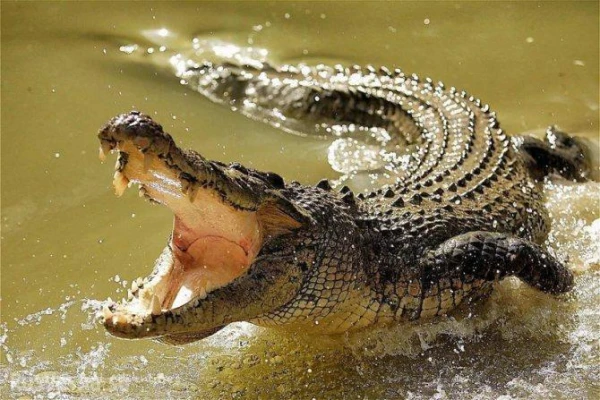
Specialists at the "Turkey Point" nuclear power plant in Florida (USA) have found that at least 400 adult American crocodiles inhabit the cooling system's water bodies. This species, once considered on the brink of extinction, became a conservation target after the first egg was discovered in 1978. Instead of destroying it, biologists were brought in, and since then, crocodiles have been successfully breeding on the plant's territory.
The "Turkey Point" nuclear power plant is located on the Atlantic coast, about 40 kilometers from Miami. Nearby are the national parks "Biscayne" and "Everglades," which serve as a natural habitat for American crocodiles. Adult individuals of this species have coloration ranging from gray-yellow to brown, reach lengths of up to four meters (males), and can weigh around 400–500 kilograms. They inhabit both fresh and brackish water — in river mouths, coastal lagoons, and mangrove swamps.
Throughout the first half of the 20th century, these reptiles were actively hunted, mainly for their skin. Currently, populations suffer from habitat loss, which is also linked to human activities. As a result, the species has been classified as endangered.
Although the cooling system of the nuclear reactors was not originally designed as a refuge for reptiles, it turned out to be an ideal environment:
cool fresh and brackish water in the channels — for adult individuals;
shored, non-overgrown banks of the channels — for nesting;
adjacent freshwater ponds — for raising offspring.
According to biologists, the first to enter the artificial channels of the nuclear power plant were females for nesting, followed by males, and then offspring were born and raised. Since the late 1970s, ponds and channels with a total length of about 270 kilometers have become the third main habitat for American crocodiles in the U.S.
On the Path to Saving the Species
The managing company of the nuclear power plant formed a so-called "croc-team" of biologists and ecologists specializing in crocodiles. This team monitors the population, annually collecting dozens of hatched hatchlings after they are left by the female. The young are microchipped to track their movements and development, and are also relocated to safe places where they have a better chance of surviving away from predators and humans who hunted them almost to extinction.
The unique isolated ecosystem around the nuclear power plant is maintained for the comfortable existence of crocodiles. Staff clean the banks to prevent them from overgrowing, so they continue to attract animals for breeding. Given that many natural nesting sites for this species are disappearing due to rising sea levels, it is important to preserve "Turkey Point" for crocodiles, biologists assert.
The "croc-team" has even been awarded by conservation organizations for successfully moving American crocodiles from the "endangered" category to the "threatened" category twelve years ago. This is not an ideal outcome, but it is already a step away from the complete extinction of the species.
According to scientists, this species poses no danger to humans — crocodiles are cautious and prefer to avoid encounters with people. Although there have been recorded cases of attacks resulting in injuries to people, they survived. The main food for American crocodiles throughout their lives is fish; young individuals hunt frogs and crustaceans, while larger crocodiles may include birds and mammals, including cattle, in their diet.
As for the population residing at the nuclear power plant, scientists assure that the water in the canal system never comes into contact with radioactive materials. Thus, hazardous elements cannot reach the animals, and local crocodiles are no different from their relatives in reserves: "Just as happy and healthy."