
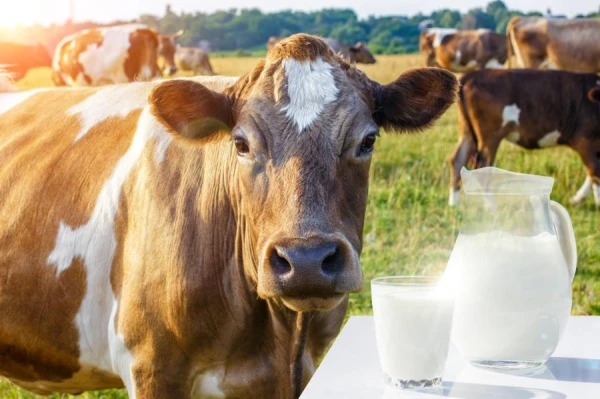
An American team of scientists conducted a study on the biomass obtained after the extraction of cannabidiol (CBD) and concluded that it poses no danger to the health of ruminant animals. This component can be included in the diet of dairy cows despite the 'somewhat unpleasant taste,' reports the scientific portal phys.org.
During the processing of hemp, a significant amount of waste biomass is produced, consisting of crushed leaves and stems of the plant. Scientists believe that it has many beneficial properties that can be applied in animal husbandry. “Hemp waste biomass has great potential in terms of nutritional value,” noted the lead researcher Dr. Massimo Bionaz from Oregon State University in Corvallis. According to him, it possesses anti-inflammatory and antioxidant properties that can positively affect the performance and overall health of animals.
To test the safety of this ingredient, the researchers selected 18 Jersey cows that were in the final stage of lactation. For the first four days, their diet was the same, after which the animals were divided into two groups. The first group received an increased amount of feed with the addition of hemp waste biomass, while the second group received alfalfa meal. In both cases, the content of additives did not exceed 13% of the total dry matter consumed.
Then, in the diet of the first group, the amount of biomass was gradually reduced, completely excluding it from the feed after four weeks. Throughout this time, the researchers recorded the dry matter intake of the cows, their body weight, body condition scores, milk yield, and activity levels. Chemical composition and fat content of the milk were also analyzed. Additionally, the researchers monitored the blood composition of the animals, nitrogen metabolism, and methane emissions.
As a result, the researchers confirmed that the use of hemp waste biomass as a potential feed ingredient does not harm the health of lactating dairy cows. However, a decrease in overall feed intake was observed in the experimental group. According to the researchers, this is related to the low palatability of the new ingredient for the cows. “Dairy cows do not like changes and may not be able to get used to the characteristic smell of hemp waste biomass, especially when presented in a concentrated pelleted form,” clarified Dr. Massimo Bionaz.
He also added that this trend did not negatively affect the productivity of the animals. Moreover, the researchers recorded a slight increase in milk yield compared to the control group. Consequently, their next goal is to determine whether the addition of hemp waste biomass in the cows' diet can enhance their productivity.
The results of the study were published in the Journal of Dairy Science.










Leave a comment