
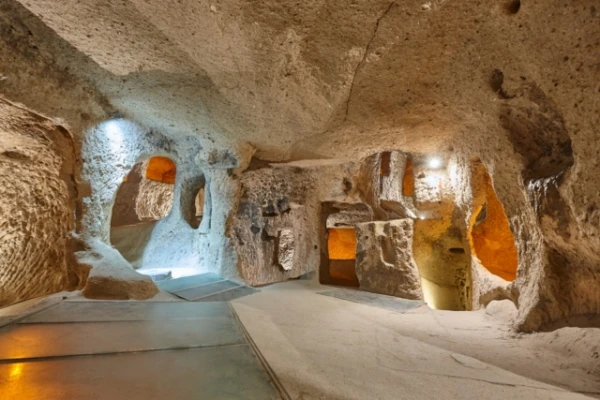
The underground city of Derinkuyu in Cappadocia was accidentally discovered in 1963 when a local resident, searching for missing chickens, stumbled upon a hidden passage in the wall of his own home.
This grand underground complex, carved into soft volcanic tuff, extends approximately 85 meters deep into the earth and includes 18 levels. At its peak, it could accommodate up to 20,000 people, serving as a reliable refuge for centuries.
The city was practically self-sufficient: it housed living quarters, storage rooms, wells, ventilation shafts, stables, wine cellars, and even prisons. Historians believe that the construction of the complex may have begun with the Hittites or Phrygians, but Derinkuyu gained the most fame as a refuge for Christians fleeing Roman persecution. Later, the city was used by the population during the Arab-Byzantine wars and Mongol invasions.
Today, Derinkuyu, along with other underground cities in Cappadocia, is listed as a UNESCO World Heritage Site, reminding us of human ingenuity and resilience. However, the missing chickens were never found.










Leave a comment