Data were collected using 77 time-lapse cameras placed in 37 colonies.
Research shows that Antarctic penguins have significantly changed their breeding timelines, likely in response to climate change. As part of a decade-long project called Penguin Watch, conducted with the participation of the University of Oxford and Oxford Brookes University, scientists recorded noticeable shifts in bird behavior: the breeding season start for certain populations has shifted more than three weeks earlier.
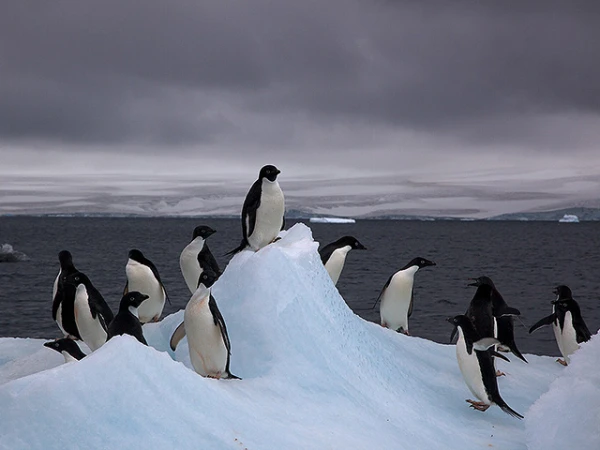
From 2012 to 2022, researchers analyzed the timing of breeding, paying special attention to the date of "settlement" of the colony – the moment when penguins first continuously occupy nesting territory. Observations covered three species: the Adélie penguin (Pygoscelis adeliae), the Antarctic penguin (P. antarcticus), and the Gentoo penguin (P. papua). The population sizes of the studied colonies ranged from several dozen to hundreds of thousands of nests.
Data were collected using 77 time-lapse cameras placed in 37 colonies in Antarctica and on several sub-Antarctic islands. Each image was accompanied by air temperature recordings. The results, published in the Journal of Animal Ecology, indicate a record early start to the breeding season for all three species.
The most pronounced changes were observed in Gentoo penguins: on average, they began breeding 13 days earlier over the decade, and in some colonies, by as much as 24 days. This is the fastest recorded shift in breeding phenology among birds and possibly among all vertebrates. Adélie penguins and Antarctic penguins also demonstrated significant changes, starting to breed about 10 days earlier than before.
Such drastic shifts may intensify competition among species in a region where climate change is likely to lead to the emergence of "winners" and "losers". Earlier breeding times could trigger competition for limited spaces and suitable nesting sites. Previously, these three species coexisted relatively peacefully due to differences in foraging depth, feeding habits, and dependence on ice cover. However, increased competition for food, other resources, and snow-free areas may complicate successful chick rearing.
At the same time, the exact reasons for such an early start to breeding remain unclear.
Possible factors include rising air temperatures, earlier melting of ice and snow, shifts in phytoplankton development, or a combination of several ecological changes.