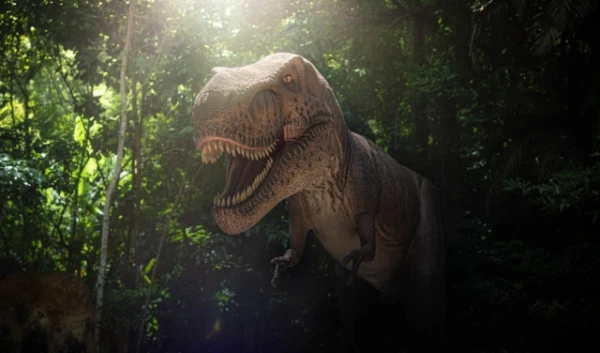
Paleontologists studying the growth rates of Tyrannosaurus rex concluded that these giant predators experienced an unusually long "teenage" period.
After a rapid growth in the early years of life, the rate of size increase in tyrannosaurs sharply declined, and they could spend up to two decades in a subadult state. During this time, the animals had already reached significant sizes—several meters in height—but did not yet possess the massive skull and physical strength of a fully mature individual.
Such a prolonged phase likely played an important role in the development of hunting skills, social behavior, and the ability to survive in a competitive environment before the animals reached the top of the food chain. This growth strategy contrasts with the development of some other large dinosaurs, which experienced more uniform size increases. It also helps explain why fully formed, sexually mature T. rex individuals were relatively rare while still dominating their ecosystems.