Shepherds are sounding the alarm due to the increasing frequency of wolf attacks. While livestock farmers consider the established limit on wolf culling too low and insist on more active issuance of emergency permits after it is exhausted, the responsible agency emphasizes the need to protect this species.
The editorial office of the show "Bez Tabu" was contacted by shepherd Gita from the village of Asare in the Jekabpils region. The film crew had visited her farm about two years ago — at that time, Gita spoke about animals torn apart by wolves.
Recently, she shared events that occurred just before the New Year: hunters tracked a pack of four wolves in the forest belonging to Gita, and in an effort to prevent a possible threat to livestock, they were ready to start hunting. However, they were unable to do so — permits were no longer available.
Gita, shepherd: "During the day, wolves walk right through the yards! In our area, a wolf entered the yard of a woman. They feel increasingly confident, getting closer and closer. A wolf should live, but in the forest."
In 2020, 115 domestic animals were affected by wolf attacks. In the following years, this bloody statistic grew, reaching almost 600 affected animals in 2023. In 2024, the number of ravaged animals decreased to 336. These are official figures, but it is believed that the real number is higher, as not all cases are reported.
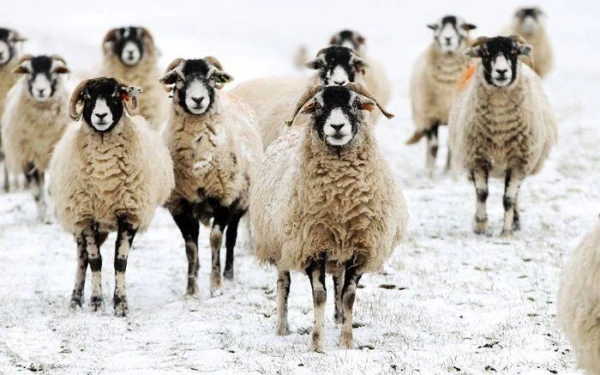
The Latvian Association of Shepherds expresses serious concern about this, noting that the number of sheep lost in a year is comparable to an entire herd.
Dmitry Bortnikov, Chairman of the Board of the Latvian Association of Shepherds: "Last year, one of our members stopped raising sheep precisely because he faced wolf attacks on his flock for several consecutive years. The statistics are horrifying!"
According to the association, the established limit on wolf culling does not correspond to the number of predators.
Dmitry Bortnikov: "If a wolf comes out of the forest and goes towards houses, I would say that there are more wolves than necessary to maintain biodiversity. There are too many wolves in Latvia. At such a population level, they reproduce faster than we can regulate their numbers."
In the current hunting season, the limit on wolf culling was increased from 300 to 370 individuals. However, in the opinion of shepherds, this is not enough. The State Forest Service (VMD) disagrees, emphasizing that the limit is based on scientific research and aimed at preserving the population.
Valters Lusis, Head of the Hunting Department at VMD: "Society has accepted the fact that the wolf is a protected species. We accepted this when joining the European Union. The wolf is an important part of nature. For livestock farmers, sheep are valuable, but the wolf in the forest is also valuable. We cannot build a fence around all the forests and forbid the wolf from coming out."
The VMD noted that the limit is not fixed: considering population dynamics and attacks, and based on the opinions of livestock farmers, it may be increased in the future. According to them, government agencies are open to dialogue.
Shepherds emphasize that after the limit is exhausted during the season, the government should be more flexible and issue emergency permits if wolves continue to attack. So far, such permits have been issued rarely — most applications were rejected. Last year, there were only two.
Gita, shepherd: "It is also concerning that wolves roam in populated areas."
The VMD explains that emergency permits are issued only in cases of threat to humans. Attacks on sheep, according to the service, are a common occurrence.
Valters Lusis: "The wolf has always hunted sheep, just as it has hunted dogs. A hundred years ago, Janis Poruks wrote a poem 'The Dog and the Wolf', so nothing has changed."
However, shepherds believe that attacks on livestock are an indirect but real threat to humans, as it affects economic activities.
The VMD urges livestock farmers to engage in prevention, pointing to available EU support for installing fencing. Shepherds note that they actively use this support and install fences, but emphasize that even these are often not a barrier to wolves.