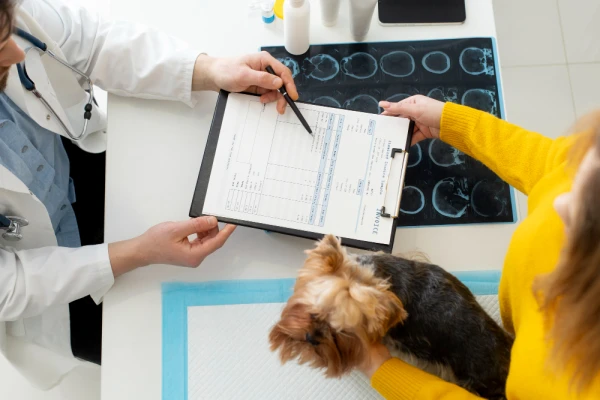
Did you think that magnetic resonance imaging (MRI) is a completely harmless procedure for your pet? However, this is not always the case. A new study by American scientists shows that scanning can lead to burns in dogs (from superficial to deep) — with prolonged treatment and complications up to amputation. Why this happens and how to avoid it is discussed in the article.
What scientists found out
A team of researchers from the University of California conducted a retrospective analysis of burn cases related to MRI procedures in dogs. Although MRI is considered a safe diagnostic method because it does not use ionizing radiation, so-called thermal injuries in animals occur more frequently than is commonly believed.
According to the FDA, there were 419 reported cases of animal burns during MRI from 1997 to 2009, while from 2008 to 2017, there were already 849 incidents.
The study examined five cases of burns in dogs at one veterinary clinic. All of them had a characteristic linear mark on the skin, and the severity ranged from superficial burns to tissue damage exposing bone.
What causes the burns
According to the researchers, the main mechanisms causing burns during MRI are not related to the magnetic field itself, but to the interaction of electrical components of the equipment and the animal's body. These processes are exacerbated by the incorrect positioning of the dog or uninsulated wires during the tomography.
What this means for your pet
The researchers note that burns during MRI in dogs occur in 0.035% of cases. However, this statistic may be incomplete, as some mild or moderate cases may go unnoticed under the animal's fur and may not be accounted for.
Despite the complete healing of wounds in all five dogs from the study, the severity of their injuries led to longer recovery times, new financial costs, and additional care. Therefore, when your pet is scheduled for an MRI, be sure to discuss safety measures with your veterinarian during the preparation for the procedure.
The authors of the article emphasize that MRI remains an important and generally safe tool in veterinary medicine. However, the risks of thermal burns are quite real. Standard protocols should take into account possible heating mechanisms and include measures for proper patient positioning and wire insulation to protect the animal from injury.