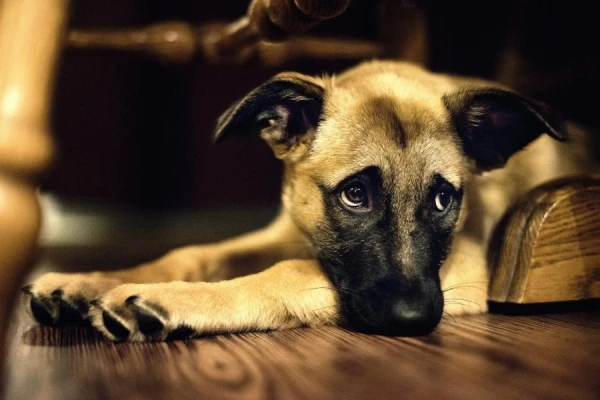
A dog may not eat for various reasons, including appetite-suppressing medications, illnesses, or stress. Some pets experience fear of the bowl or prefer to hunt for food rather than receive it in the usual place. This was explained by Tatyana Romanova, a dog behavior specialist and trainer.
The expert highlighted several reasons why a dog may refuse food and offered solutions for each situation.
Illness
“If your dog is not eating, the first step is to consult a veterinarian, as this may indicate an illness. If the pet is sick, it needs to be treated,” noted Tatyana Romanova.
Appetite-Suppressing Medications
Another reason for refusing food could be medications that suppress appetite, the specialist explained. In this case, she recommends using commands that the pet knows well and that have been reinforced with positive experiences. “The commands should be simple. For example, touching the owner's palm with their nose and receiving a treat for it. This will help form a positive behavioral model: touch the nose – get a piece. This action will bring joy to the dog, and it will start eating. My dog often gets sick and loses appetite, and I regularly use this exercise to feed her,” shared the speaker's experience.
Additionally, she advises using food games, such as making the dog run to the food. However, such exercises are not suitable if the pet is feeling unwell, the specialist warned. “Therefore, it is important to study these tricks and commands in advance; they may prove useful,” she added.
Also, if the dog is not eating due to appetite-suppressing medications, it may be worth considering finding alternative medications.
Hot Weather
Furthermore, a dog may lose its appetite due to heat. “Often in hot weather, dogs reduce their food intake, start eating only the tastiest dishes, or skip meals altogether,” the expert explained.
During hot weather, she recommends offering the pet lighter food or reducing portions. “Another useful tip is to move the main feeding to the evening. For example, if the dog usually gets 50 grams of food in the morning and 50 grams in the evening, in the heat, you can give 20–25 grams in the morning and the remaining portion in the evening,” Tatyana Romanova said.
Stress
Another reason a dog may refuse food is stress. “Stress can arise from illnesses, fears, or anxiety,” the speaker listed.
In this case, she advises analyzing the daily routine, activity level, and behavioral characteristics. “It is important to consult professionals, as a lack of activity can cause the same stress as an excess. With the help of professionals, you can understand whether to increase or decrease the load for your dog,” the expert explained.
Fear of the Bowl
A dog may have a fear of the bowl or the surface it stands on – this is another reason why the pet may not eat. “Such dogs approach the bowl but either do not take the food at all or take a few kibbles and carry them away to eat there,” the speaker commented. She provided an example where a dog is frightened by the sound of a moving ceramic bowl during feeding.
In this case, she recommends not just replacing the bowl but choosing a different material. “Or fix the bowl with a non-slip mat,” the specialist advises.
Difficulty-Seeking Phenomenon
“A dog may not eat from the bowl because it is not interesting to them,” Tatyana Romanova said. “The food itself is not important; the dog is more interested in hunting for it.”
The expert noted that she encounters such dogs in her practice. “Usually, these are pets with certain physiological problems. For example, a dog may experience discomfort, like gastritis, and does not want to eat from the bowl. When the food is made more interesting, the dog is ready to eat it,” concluded the speaker.