
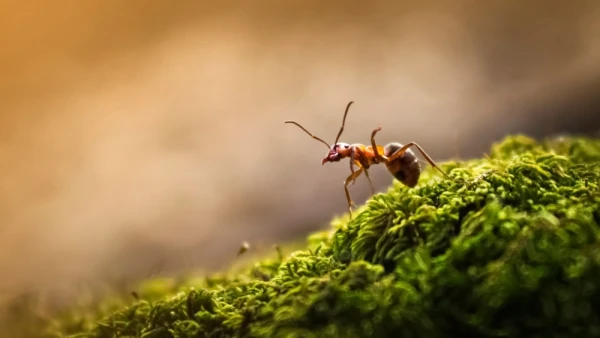
The scientists' experiment confirmed the effectiveness of their behavior.
Scientists from the University of Bristol (UK) have found that ants can consciously restructure their homes to stop the spread of disease. This is the first evidence that animals, aside from humans, are capable of changing the architecture of their environment to reduce the risk of epidemics.
The study, the results of which were published in the journal Science, showed that colonies facing the threat of disease begin to dig nests differently. In such ant hills, more dispersed entrances appear, and the internal space becomes isolated — chambers have fewer direct connections with each other.
"We already knew that ants change their digging behavior depending on other factors, such as temperature and soil composition," explained the lead author of the study, Dr. Luke Leckie. "But this is the first case where it has been proven that an animal alters the structure of its environment to reduce the risk of disease transmission."
Previously, other clever tactics for combating diseases in ants, which scientists refer to as "social immunity," were known. They can groom spores of dangerous fungi off their nestmates with their jaws, spray them with disinfectant substances, and even go into "self-isolation" — sick individuals voluntarily limit contact to protect the entire colony. By the way, ants are among the top 10 strongest animals on Earth.
In nature, ants dig complex underground cities with an intricate network of tunnels and special chambers — for storing food, resting, and raising offspring. To understand how disease affects construction, scientists used micro-computed tomography. This allowed them to look inside the ant's habitat without destroying it.
The experiment was set up as follows: two groups of 180 worker ants were placed in containers with soil, where they began to build nests. After a day, 20 healthy ants were added to one colony, while 20 individuals that had come into contact with fungal spores were added to the other. The insects were then left to dig for another six days, periodically scanning their underground structures.
When 3D models of the nests were created based on the scans and the spread of the disease was simulated within them, the results were impressive. The architectural changes made in the "infected" colony actually worked. They helped reduce the risk of infecting nestmates with lethal doses of pathogens. Thanks to such reorganization, the ants protected the most vulnerable and important areas — where food is stored and young are raised.








Leave a comment