
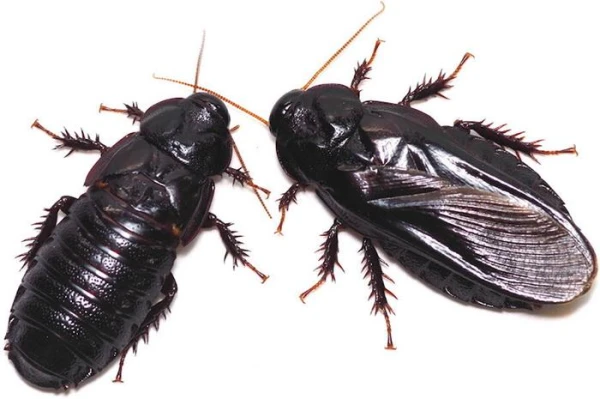
It is said that if a nuclear catastrophe occurs on Earth, only cockroaches will survive! Testing this theory is difficult, however, another astonishing fact about the resilience of cockroaches has long been proven. Yes, it is true! Cockroaches can indeed live without their heads for weeks.
To understand why cockroaches, like many other insects, can easily survive decapitation, one must refer to a similar process in humans. First, when a human or large mammal is decapitated, a lot of blood is lost, and blood pressure drops significantly, which hinders the transport of oxygen and nutrients to vital tissues. Additionally, humans breathe through the mouth or nose, and the brain controls this critical function, so without a head, breathing will cease.
But cockroaches do not have blood pressure like humans. These creatures have an open circulatory system, in which the pressure is much lower. After a cockroach loses its head, the blood at the cut site simply clots.
These parasites breathe through spiracles—small openings in various parts of their bodies. They direct air directly to the tissues through tracheae, and this process is not controlled by the brain, nor does the insect need to transport oxygen through the blood.
But how will a cockroach survive without a mouth? Won't it want to eat? Cockroaches are poikilothermic, meaning they are cold-blooded creatures. They require much less food than, for example, humans. Therefore, if the insect does not become ill or is not eaten by a predator, it can live for several weeks without food.
Without a brain, a cockroach's body can still function, performing simple functions and reflexes. This is due to the ganglia—clusters of nerve tissue distributed within each body segment that can perform basic nerve functions. All these features of the insect allow it to live even after its head is severed.












Leave a comment