
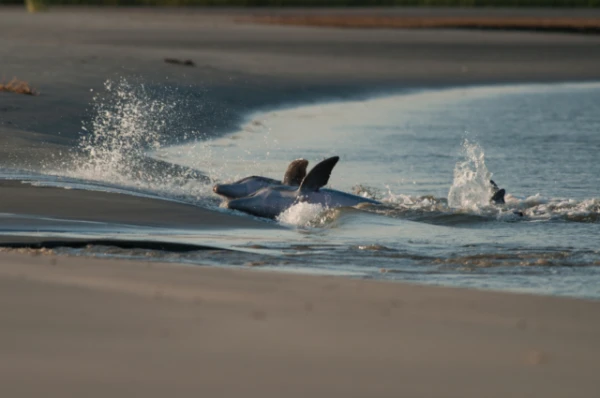
Scientists have found that the brains of dolphins that stranded in the Indian River Lagoon (Florida) show changes similar to signs of Alzheimer's disease.
Tissue analysis showed that during toxic algal blooms, the concentration of the neurotoxin 2,4-diaminobutyric acid (2,4-DAB) in the animals' brains increases by approximately 2900 times.
These toxins, produced by harmful algae, contribute to the formation of amyloid plaques — characteristic markers of neurodegenerative diseases. Although such plaques are sometimes found in older dolphins, mass algal blooms significantly accelerate this process, causing disorientation and likely leading to strandings.
This discovery serves as a troubling signal for human health as similar toxins can also have harmful effects on people.














Leave a comment