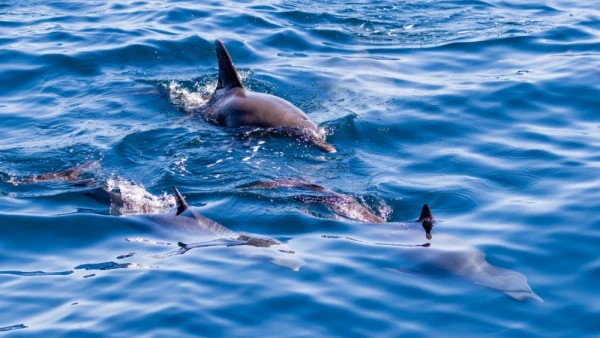
On the French island of Mayotte in the Indian Ocean, scientists encountered a dolphin that combines traits of two different species — the Indo-Pacific bottlenose dolphin and the humpback dolphin. The emergence of such a hybrid is not just a rare curiosity, but a troubling signal that the fragile ecosystem of the lagoon is in serious danger, writes Earth.org.
The lagoon of Mayotte is one of the largest and deepest in the world, a true underwater sanctuary. It is home to hundreds of species of fish and more than twenty species of marine mammals. The populations of two species of dolphins — the very ones whose traits are combined in the hybrid — are rapidly declining. According to conservationists, fewer than five humpback dolphins remain in the lagoon.
Normally, dolphins mate only with individuals of their own species. But when the population becomes too small and isolated, it becomes difficult for animals to find a mate. In such a desperate situation, the boundaries between species begin to blur.
"Hybridization is often a sign of severe ecological stress," specialists explain. "When there are almost no relatives left, dolphins are forced to make unusual choices to continue their lineage."
The Indian Ocean humpback dolphin is already listed in the international Red Book as a species on the brink of extinction. Worldwide, these animals suffer from fishing nets, collisions with vessels, and noise pollution. In Mayotte, the situation is catastrophic — the local population is close to what is known as functional extinction.
Another unusual case in the lagoon underscores the depth of the problem: a humpback dolphin was spotted acting as a 'foster mother' to a group of spinner dolphin calves. Such interspecies caregiving is extremely rare in the wild. Scientists see this as a manifestation of the dolphins' high intelligence and at the same time a desperate attempt to survive when traditional social structures collapse.