No.
Pseudoscorpions are a unique order within the broad class of arachnids. Unlike true scorpions, these creatures are completely harmless and pose no threat to humans. They lack venom glands. Pseudoscorpions hunt small invertebrates, which they can easily manage.
The pseudoscorpion is one of the most common inhabitants of our homes. Due to its secretive and predominantly nocturnal lifestyle, it is rarely seen. At night, it can unexpectedly be found in the bathroom or toilet — pseudoscorpions prefer a humid environment.
There are over a thousand species of pseudoscorpions in the world. Most of them inhabit tropical regions, although some have adapted to life in temperate latitudes.
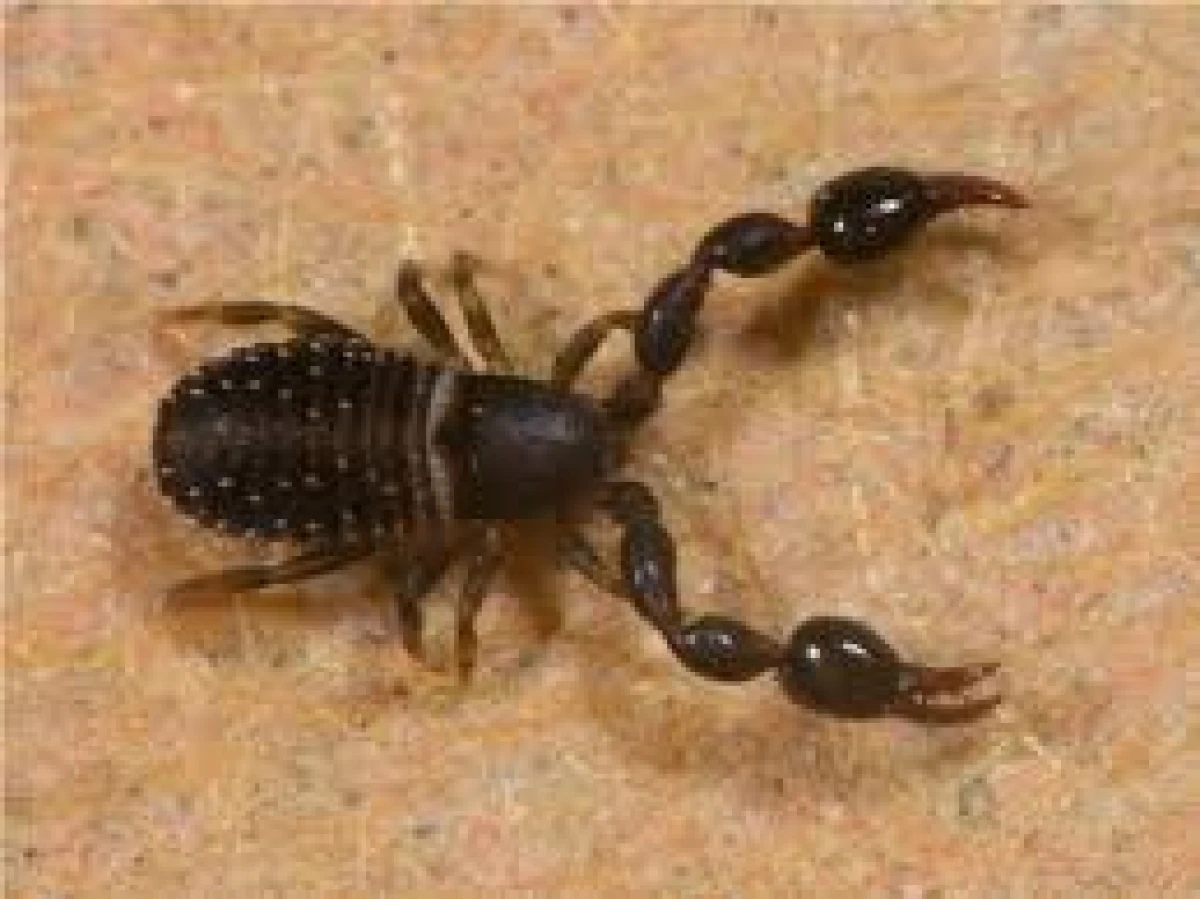
In urban apartments, the book pseudoscorpion (Chelifer cancroides, in the photo) is most commonly encountered. It feeds on booklice, known as "bookworms," and does not shy away from feeding on mold mites, small cockroaches, and other tiny apartment dwellers.
Sometimes, one can see a pseudoscorpion riding on a common housefly, which is several times larger than itself. This small predator calmly moves on its prey, slowly consuming it. Thus, pseudoscorpions are among the few truly beneficial inhabitants of human dwellings. They do us no harm and, unlike their distant spider relatives, do not spin webs.
The "wild" pseudoscorpion from the genus Chernes is most often found under the bark of old trees, where it hunts small local inhabitants. It prefers broadleaf species and is most commonly found in decaying oaks and linden trees. It cannot be found under the bark of pine or spruce. Like their "domestic" counterparts, "wild" pseudoscorpions are predators and, along with spiders, soil mites, ground beetles, and other small carnivorous representatives of the fauna, regulate the population of various herbivorous species, including pests.