
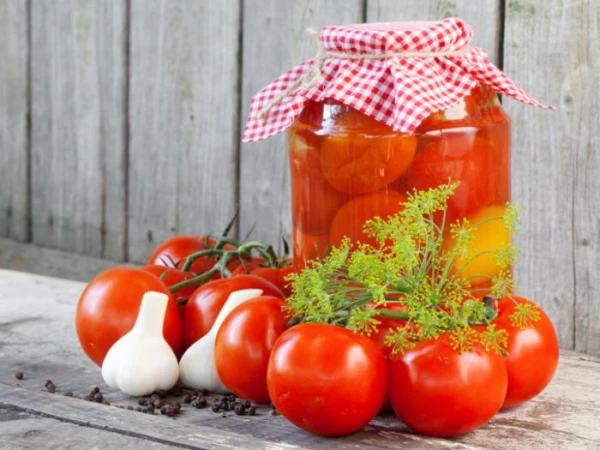
Currently, the prices of fresh vegetables have reached record levels, and this situation will last until summer. Can they be replaced with more affordable canned options? Abandoning natural gifts can be dangerous: WHO and leading medical organizations recommend consuming at least 0.5 kg of vegetables per day to maintain health.
Canning
Surprisingly, most vitamins and beneficial substances are preserved in canned vegetables. This was confirmed by a study conducted by the German Fresenius Institute, which is the largest center for food certification and quality control.
The study compared the vitamin and mineral content in dishes made from fresh and canned vegetables. Surprisingly, in many respects, canned goods turned out to be more beneficial. Thus, a partial transition from fresh vegetables to canned ones can help save money without harming health.
Leaders among vegetables
In the vegetable competition, the best results were shown by tomatoes in their own juice and sauerkraut. They are closely followed by green peas, various types of beans (including kidney beans and green beans), sprouts, sweet corn, carrots, red cabbage, and kale, as well as vegetable mixes (such as Mexican mix, minestrone, etc.). However, the latter did not exceed the nutrient content of dishes made from fresh ingredients.
Generally, canned goods contain 1-4% more vitamins and minerals. But in some respects, canned goods significantly outperform fresh vegetables. For example, a 200-gram serving of canned tomatoes contains 2.6 mg of lycopene, while fresh tomatoes contain only 0.6 mg — four times less. Canned goods also had significantly more vitamin C and beta-carotene. The amount of ascorbic acid in sauerkraut was also significantly higher.
Slowing down decay in the can
How is this possible? Vegetables before canning are in perfect condition — they are ripe, fresh, and just harvested from the garden, which ensures maximum vitamin content. During thermal processing, some vitamins are lost, but in an airtight can, they are essentially “frozen,” and vitamins along with other beneficial substances do not decompose. This happens due to protection from oxygen and light, which are the main factors that destroy vitamins in ordinary unprocessed vegetables.












Leave a comment