
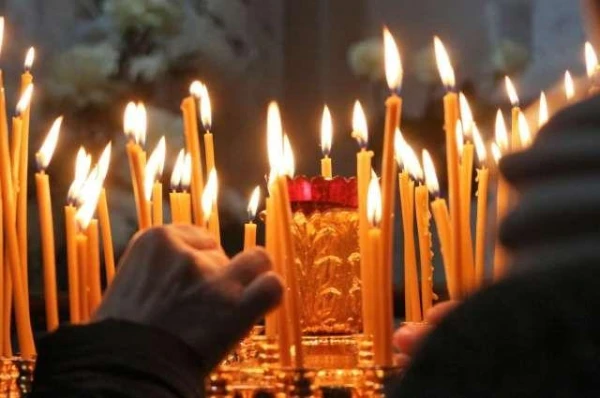
The last day of Maslenitsa week, which falls on March 17, 2024, is called Forgiveness Sunday. During this time, a rite of forgiveness takes place in Orthodox churches. After the liturgy, clergy and parishioners sincerely ask each other for forgiveness.
Forgiveness Sunday, celebrated on the last day of Maslenitsa week, has become a good tradition. This opportunity to repent before those who have been offended, often not out of malice, helps to cleanse the soul.
Why the Last Sunday Before Lent Has Different Names
Forgiveness Sunday, which precedes the beginning of Lent, is known by three names. Two of them — Cheese-Fare Week and Adam's Exile — are found in church literature, while the third — Forgiveness Sunday — is colloquial, widely used in Orthodox circles.
All three names have a simple explanation. “Cheese-Fare Week” indicates that this day is the last when the consumption of dairy products, cheese, and the like is allowed. The word “Fare” means “leaving” or “saying goodbye.” Cheese-Fare Week concludes Cheese Week, known to the people as Maslenitsa. Thus, Forgiveness Sunday marks the end of Maslenitsa.
The name “Adam's Exile” is also not accidental. On the eve of Lent, Orthodox churches remember the biblical story of the expulsion of people from paradise. The Almighty forgave Adam and Eve for breaking His commandment. People should also find the strength within themselves to forgive their offenders and ask for forgiveness from them.
The name “Forgiveness Sunday,” which has become popular among the people, is associated with the rite of forgiveness that takes place in churches on this day. The roots of this tradition date back to ancient times when Egyptian monks, preparing for Easter, left monasteries and went into the deserts. They spent the entire fast in caves, constantly praying to the Almighty.
Many of them did not return, perishing from heat, hunger, or attacks by wild animals. Understanding the unpredictability of fate, the monks asked each other for forgiveness before leaving and forgave their offenders.
Several centuries later, the rite of forgiveness appeared. After Vespers, it is performed by the rector of the church, bowing to the parishioners and asking for their forgiveness. The parishioners respond with a bow. Even those who rarely visit churches ask for forgiveness from their loved ones during Cheese-Fare Week.
When Forgiveness Sunday is Celebrated in 2024
Forgiveness Sunday does not have a fixed date but is linked to events such as Maslenitsa week and Lent, which precedes Easter.
In 2024, Maslenitsa week will begin on March 11, the day after the Universal Parent Saturday, which Orthodox Christians will celebrate on March 9. It will end on the 17th, before the beginning of Lent. This year, Lent will start on March 18, last for 48 days, and end on May 4, the eve of Easter. Forgiveness Sunday in 2024 will be celebrated on March 17.
How to Properly Ask for Forgiveness
On Forgiveness Sunday, people, even those who are not churchgoers, strive for reconciliation in any circumstances. Forgiveness can be asked at home, at work, on the street, or over the phone.
Clergy advise doing it as follows: during a personal meeting, bow and say: “Forgive me, (name), for what I have sinned against you.” In response, a bow is also made with the words: “God will forgive you, and I forgive.”
On Forgiveness Sunday, younger people ask for forgiveness from their elders.
Forgiveness is also sought not only from the living but also from those who have already passed away. Special pancakes are left for deceased relatives, which also stand on the table. As priests note, there is no tradition of visiting cemeteries, but there are no special prohibitions either.
It is clear that now bows may seem somewhat outdated. Modern people often do without them, especially outside of church. The main thing is the sincerity in the request for forgiveness, not the formality, as well as hearing that one is forgiven and putting an end to mutual grievances.
What Can Be Done on Forgiveness Sunday
There are things to remember not only during these days. Forgiveness Sunday is a great occasion to reflect on this. On the last day of Maslenitsa, it is recommended to:
Visit the church. Although forgiveness can be asked throughout the day, the first words about it are spoken within the walls of the temple.
Ask for forgiveness from relatives, acquaintances, neighbors, and friends. One should not think that someone is without sin. Everyone can inadvertently offend with a word, glance, or action.
Forgive a person who has come with such a request. If something prevents you from responding “God will forgive you, and I forgive,” it is worth putting yourself in the place of the requester. The church teaches that the Almighty is all-merciful, but there are things He does not forgive.
Give alms. On Forgiveness Sunday, the manifestation of mercy can be considered a test of humanity.
Go to the bathhouse (sauna) to wash away sins.
The last day of Maslenitsa, followed by Lent, is recommended to be spent with loved ones. But this does not mean that one must stay home all day. In ancient times, people had fun during this time, remembering that during the forty-eight days of Lent, they would not be able to have fun or eat their usual food.
Forgiveness Sunday: Folk Omens
One of the main omens of the holiday has become pancakes. Hostesses bake them all week, demonstrating their skills passed down from grandmothers, mothers, friends, and acquaintances.
Pancakes with sour cream, butter, honey, with fillings of red caviar, salmon, mushrooms — there are many ways to prepare them. The main thing is that pancakes are on the table during Maslenitsa week and on Forgiveness Sunday.
One of the main omens of Forgiveness Sunday is associated with the burning of the Maslenitsa effigy, symbolizing the cold and treacherous winter, which has become tiresome for everyone. The effigy, made of straw, wood, and other plant materials, was burned on a bonfire, throwing in unnecessary things and saying goodbye to what hinders life.
Pancake sellers knew that if they managed to sell all the pancakes prepared on Forgiveness Sunday, and the first buyer was a man, then the firstborn in the family would be a boy.
There are also omens related to the weather. If it is sunny and warm on Forgiveness Sunday, the year will be fruitful, and the autumn will be warm.
What Not to Do on Forgiveness Sunday
Forgiveness Sunday has its prohibitions. Some of them have pagan roots, others are Orthodox. Much intertwines, so it can be difficult to figure out what comes from where. Nevertheless, on Forgiveness Sunday, it is forbidden to:
Consume meat products. According to church traditions, meat dishes were allowed to be eaten for the last time on March 10 (in 2024).
Do house cleaning. This is usually done the day before.
Sew, knit, or embroider. In general, engage in handicrafts. In ancient times, it was said that this could attract misfortunes.
Quarrel and insult each other. According to beliefs, this will attract misfortunes into the home.
Refuse alms. Our ancestors believed that this could lead to poverty.
















Leave a comment