
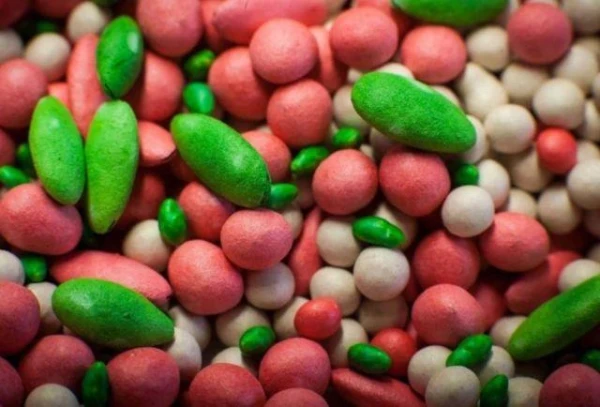
Coated seeds can be found on the market. Is it worth purchasing them?
Coating is a method in which seeds are covered with layers of special compositions containing nutrients, trace elements, growth regulators, and sometimes substances that repel pests. Usually, small seeds such as carrots, lettuce, parsley, onions, and many flower seeds are coated.
The advantages of coating include that when planted in the soil, the necessary complex of nutrients reaches each germinated seed individually. This contributes to more uniform and even germination. It should be noted that this idea is not new. In Ancient Egypt, seeds were treated with onion juice, which served as a kind of growth stimulant, and in the Middle Ages, liquid manure with added mineral salts was used. As soon as the seed sprouts, it immediately receives full nutrition and begins to grow actively.
Coated seeds are significantly larger than ordinary ones, which makes it easier to place them in holes one by one. Furthermore, the plants do not interfere with each other, which undoubtedly has a positive effect on yield. Such seeds germinate 5–6 days later than ordinary ones, but their growth occurs faster thereafter.









Leave a comment