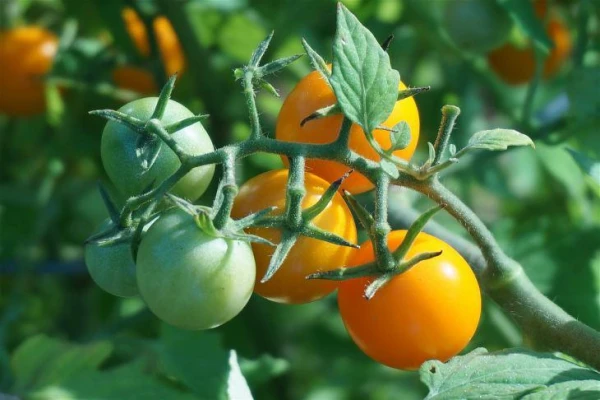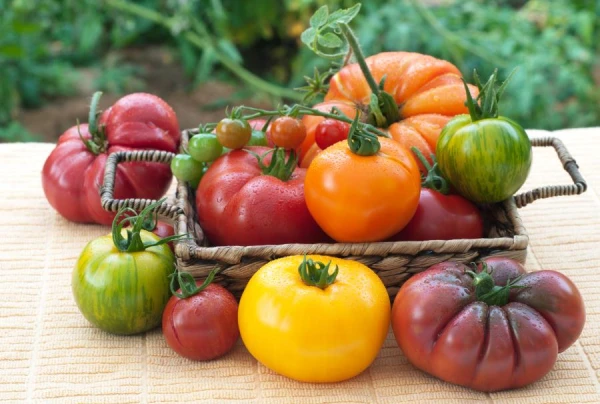
If you are among those who put tomatoes in the refrigerator, you probably often express dissatisfaction about how “store-bought tomatoes in winter are of poor quality.” Perhaps you should just take the tomatoes out of the refrigerator.
Storing tomatoes in the refrigerator may prolong their freshness, but it also leads to a loss of their characteristic flavor.
Scientists and food enthusiasts have long known about the negative impact of cooling on the taste of tomatoes, but for a long time, the reasons for this remained a mystery. Fortunately, a few years ago, this mystery was unraveled!
Why Tomatoes Lose Flavor in the Refrigerator
According to a study published in the Proceedings of the National Academy of Sciences, when the ambient temperature of a tomato drops below 20°C, the genes responsible for its flavor simply turn off!
“Essentially, the tomato cools down and tells itself to stop producing aromatic compounds,” says Denise Tieman, a research associate at the University of Florida's Center for Plant Innovation in Gainesville. “These changes are irreversible.”
Tieman, who has been studying the flavor characteristics of various foods for over 20 years, previously established that the flavor of tomatoes is formed by a combination of sugars, acids, and a group of chemicals known as volatile compounds or aromatic compounds. These make up the main part of the flavor bouquet. Sugars and acids are what you taste on your tongue, but without aromatic compounds, the flavor will not be “the one.”
Scientists already knew that refrigerated tomatoes contain the same amount of sugars and acids as fresh ones, but they have significantly fewer aromatic compounds.
Experiments showed that tomatoes stored in the refrigerator for seven days had the lowest amount of volatile substances; however, even after three days of cooling, the level of aromatic compounds remained significantly lower compared to fresh tomatoes. In a tasting test, participants rated the refrigerated tomatoes as less tasty than the fresh ones.
Additional experiments demonstrated that refrigerated tomatoes contain fewer proteins responsible for forming aromatic compounds than fresh ones. Analysis showed that the genes coding for these aromatic compounds are turned off in a process known as methylation when the tomato is in a cool environment for too long.
This research has prompted scientists to look for tomato varieties that are resistant to cooling. Even if consumers can be convinced not to store tomatoes in the refrigerator, most of them are still cooled in distribution centers and then again in stores to make them look appealing enough for buyers. Therefore, the search for a “hardy” tomato continues!