To ensure the first pancake doesn't turn out lumpy and that Maslenitsa week is enjoyable and cost-effective, it is essential to choose the right pancake pan. With a sensible approach, experts claim, it will not only reduce the amount of burnt batter thrown away but also last for many years.
Chef Mikhail Kotelevsky noted that the ideal pan is one that heats up quickly, has a comfortable handle, a thick bottom, low sides, and optimal weight.
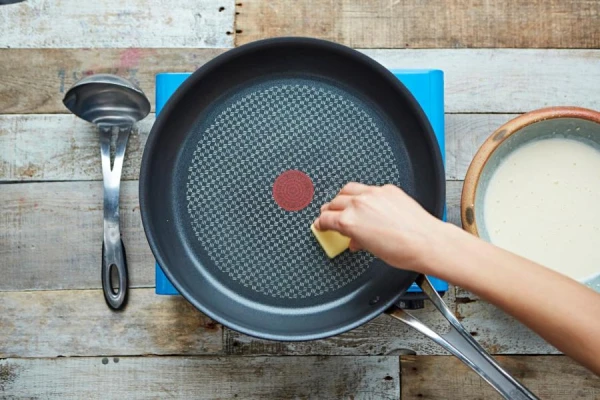
“A non-stick pan is the best option for making pancakes. Such a surface prevents the batter from sticking and allows for cooking without oil. However, this coating requires careful handling and does not tolerate metal spatulas and forks — only silicone or wooden ones. The size of the pan also affects the baking speed: the optimal diameter is between 20 and 26 cm. The pan should match the size of the burner for even heating. Too large pans are inconvenient to use, as they take up a lot of space and are hard to maneuver,” added Kotelevsky.
The expert clarified that the bottom of the pan should be thick enough, as this affects the even distribution of heat. A pan with an induction base is suitable for all types of stoves, as long as the inner surface is perfectly flat, without reliefs or protrusions.
Chef Oleg Titov emphasized that the main requirement for a pancake pan is sides no higher than two centimeters, a thick bottom, and the ability to withstand temperature fluctuations.
“If these conditions are met, the batter will seize evenly, and the pancake will not burn or tear when flipped. Of course, the most durable pans are cast iron, but they require special care and preparation: they need to be well seasoned before each use. Aluminum pans are lightweight and easy to maintain, but they scratch easily. When choosing a pan, it is also worth considering the type of stove and the possibility of washing it in a dishwasher. Beginners may want to look at electric crepe makers — they simplify the process of making thin and lacy pancakes without burning,” the expert concluded.
PhD in Technical Sciences Raisa Platova added that one should not skimp on the thickness of the bottom when buying a pancake pan. A thin bottom can lead to burning edges of the pancakes. Cast iron is the ideal material for such cookware, as it has high thermal capacity and density, which helps avoid deformation during sharp temperature changes. Such a pan will last a long time, freeing the hostess from the need for frequent replacements. However, it has a drawback — its heavy weight.
“Aluminum pans are produced in two ways: sheet stamping and casting. They differ in the thickness of the bottom and walls, type of coatings, and method of handle attachment. A cast pancake pan has several advantages over a stamped one: a pan with a bottom thickness of 6-8 mm has the same volumetric thermal capacity as a cast iron one and does not deform. Non-stick aluminum pans prevent pancakes from sticking to the bottom and sides,” the expert explained.
Thus, hostesses looking to purchase a pancake pan for the long term and reduce food waste due to stuck batter and fragile pancakes should consider cast iron or cast aluminum options. However, with aluminum, it is important to handle the non-stick coating carefully and follow the manufacturer's care recommendations.