
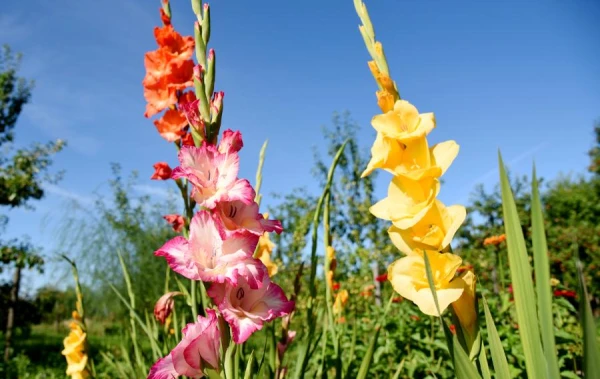
In the 19th century.
The first records of gladioluses date back to the 1st century AD. The name of this plant from the iris family — gladiolus, with its straight sword-shaped leaves, comes from the Latin word gladius, which translates to "sword."
In Ancient Greece, these flowers were known as xiphion, which also translates to "sword." Bright red wildflowers were described by the Greek physician Dioscorides. The Greeks considered them weeds, although they sometimes used the ground bulbs in flour for baking bread.
As ornamental plants, gladioluses began to gain recognition in Europe only in the 19th century. In 1837, Belgian gardener Herman Beddinghause, by crossing South African species, produced a hybrid known as the Ghent gladiolus. It is from this moment that the modern history of garden gladioluses begins. The beauty and elegance of these magnificent flowers, as well as their longevity when cut, were duly appreciated by florists around the world.









Leave a comment