On the tree that produces candies.
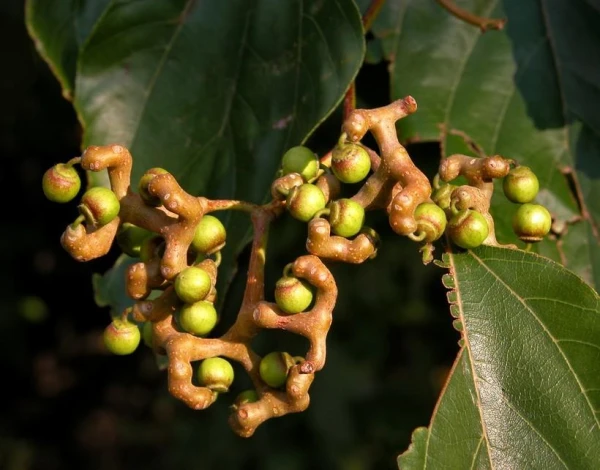
In the forests of China, India, Japan, and Korea, one can find Hovenia dulcis — a tree known as the candy tree. This name for the plant from the buckthorn family is not accidental. It truly produces “candies” — surprisingly sweet petioles that contain up to 40% sugar.
These brown, curved twigs are quite edible and taste reminiscent of tart raisins. Dried, they are used as sweets in China and Japan, where Hovenia is specially cultivated.
The candy tree is a rather large plant, reaching heights of up to 20 meters, and it is particularly beautiful during the flowering period. Over time, its small white flowers turn into hard, dry fruits that have no practical use. However, the fleshy petioles usually yield a good harvest — from one adult tree, one can collect up to 30 kg of “candies.” In the USSR, the cultivation of the candy tree began in 1936 at the experimental station of dry subtropics in the Azerbaijani village of Mardakyan, from where this plant spread to the warmer regions of Crimea, the Caucasus, and Central Asia.