
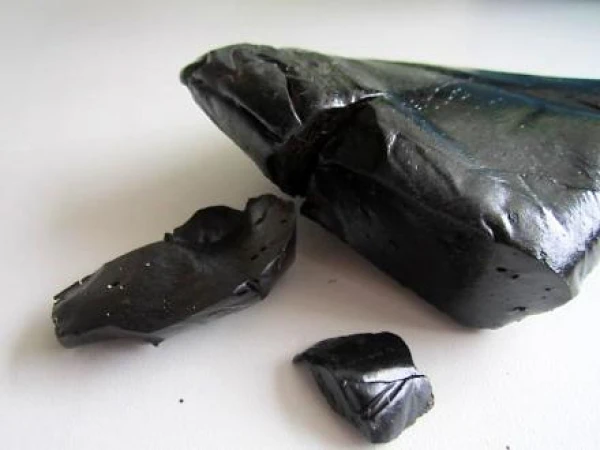
In Soviet times, mumiyo was used to treat many diseases, but today it is almost forgotten. So what is mumiyo — fossilized bat excrement or a healing resin? Let's figure out what mumiyo is and how beneficial it really is.
What is mumiyo?
It is unknown when and who first decided to use the strange solid black resin found in rock crevices as medicine. However, as early as Ancient Greece and Ancient India, doctors believed that this substance could cure any disease. In the East, it was called mumiyo-asyl or al-mumiyah, derived from the Persian word "mum" — "wax", and in India, it was referred to as shilajit. This name is still used today.
There are various legends about the origin of mumiyo: some claimed it was the solidified blood of warriors or the tears of giants seeping through the rocks. However, scientists lean towards more plausible versions, according to which mumiyo is fossilized excrement of bats or the byproducts of ancient bees, consisting of fermented remnants of mountain plants. There is also an opinion that black mumiyo is a beneficial oil, representing a mineral-organic product formed during the anaerobic decomposition of ancient wood and other organic materials. In any case, it is a concentrate of benefits created by nature.
What are the benefits of mumiyo?
Surprisingly, the natural origin of this substance has not yet been established, while its beneficial properties are well known! Mumiyo contains more than 50 mineral-organic substances necessary for human health. These include amino acids, macro- and microelements (such as calcium, iron, manganese, etc.), vitamins, and fatty acids. Since ancient times, mumiyo has been used for fractures, as it was believed to promote tissue regeneration, as well as for gastrointestinal diseases, upper respiratory tract issues, kidney and liver problems, poisoning, and even allergies.
Mumiyo has anti-inflammatory and bactericidal properties, which is why it was used in ancient times as a substitute for antibiotics. It is also a natural antioxidant and adaptogen — a substance that strengthens the immune system, stimulates the central nervous system, alleviates fatigue and irritability, restores physical and mental performance, and improves metabolism. When applied externally, in ointments, mumiyo helps with sciatica and joint diseases.
How is mumiyo harvested?
Mumiyo is a valuable natural mineral that can be found in mountains, such as in Altai and the Caucasus. The dark brown or black substrate, resembling resin, is found in rock crevices and contains many impurities — sand, small stones, clay, wood, so it cannot be consumed in this form. After extraction, raw mumiyo is processed: it is dissolved in water, filtered, and then dried again, resulting in a pure, pliable dark mass. By the way, real mumiyo completely dissolves in water, which ensures its excellent absorption by the body.
How to take mumiyo?
It should be noted that official medicine does not use this substance for the prevention or treatment of diseases. However, supporters of alternative and folk medicine, relying on ancestral experience, treat it with respect. Many still consider mumiyo a panacea for various health problems. It is available in pharmacies in the form of tablets and capsules — it can be purest Altai mumiyo or Indian powder. Sometimes, this substance can also be found in markets as a piece of resin, which is considered the most natural, but in this case, there is a risk of encountering a counterfeit.
Indeed, anything can be sold under the guise of a thick black mass — a mixture of propolis, burnt sugar, clay, vegetable oil, bitumen resin, etc. This is how sellers of this "miraculous" remedy operated in the Middle Ages, telling tales of its unusual properties.
Mumiyo can be included in creams, ointments, drops, and alcoholic tinctures. The dosage and duration of intake are usually indicated on the packaging, but it is worth remembering that this is a rather potent substance, so it is better to consult a doctor before use.
Harms of mumiyo
Since mumiyo has not yet been fully studied, and considering its tonic properties, it is not recommended for people with hypertension and oncological diseases, as well as during pregnancy and breastfeeding. Additionally, mumiyo can cause allergic reactions in individuals with intolerance to its components.
Before taking mumiyo, be sure to consult a doctor.











Leave a comment