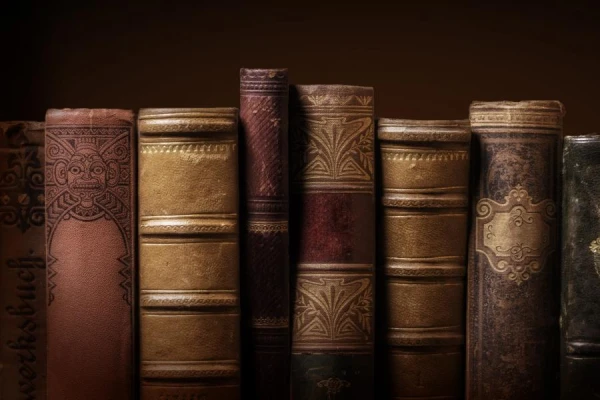
Despite opinions, paper books are much more soulful than e-books: they can be held in hands, flipped through, and their aroma can be inhaled...
Why Books Have a Smell
Prose and poetry are eternal. However, the books that contain them have a limited lifespan. Paper is made from cellulose and a small amount of lignin—a complex aromatic polymer of natural origin found in plants and formed during the biosynthesis process. Over time, the substances that make up the paper begin to decompose, which leads to the formation of smell. By the way, it is lignin that gives old paper a yellowish tint.
The Smell of Old Books
Old books emit a sweet aroma with notes of vanilla and almond. This scent is due to organic compounds such as benzaldehyde, vanillin, ethylhexanol, toluene, and ethylbenzene. Over time, they begin to release a sweet smell as a result of a chemical reaction—acid hydrolysis, during which volatile compounds are formed.
The Smell of New Books
The aroma of new books consists of three components: the smell of the paper itself (which is pleasant due to the chemicals used in its production), the smell of the ink used for printing, and the smell of the glue.