Five effective recommendations that really work
Avoid Sharp Maneuvers
A sudden start with wheel spin, like in the movie "Fast and Furious," looks impressive but negatively affects the condition of the tires. Frequent starts that leave black marks on the asphalt lead to faster tread wear. The same applies to braking. If your car is not equipped with ABS, there is a risk of "squaring" one of the tires.
Do Not Overload the Car
Each tire has its load index, which can be easily found online. To determine the maximum allowable weight of the vehicle, you need to multiply this index by four.
It is also worth noting that when transporting cargo, it is advisable to increase the tire pressure. Specific recommendations can be found on the sticker on the body or in the user manual. After transporting heavy loads, the tires should be returned to their normal pressure.
Monitor Speed
Tire wear directly depends on the speed at which the vehicle owner drives. At high speeds, tires heat up more, leading to increased pressure. Therefore, all drivers should remember that driving on highways significantly reduces the lifespan of tires.
Check Tire Pressure
Regular pressure checks are important for both travel safety and the preservation of the tires themselves. Overinflated or underinflated tires wear out faster than those at normal pressure.
Unfortunately, on the road, one can run over a screw or self-tapping screw, and many do not notice it, continuing to drive with a partially deflated tire, which can lead to sidewall damage later.
Most modern cars are equipped with tire pressure sensors, and if they are not, it is advisable to have a pressure gauge in the garage and check the pressure at least once every two weeks.
Proper Tire Storage
There is a belief that after seasonal tire changes, special storage conditions are not needed — many drivers leave them on the balcony or at their summer cottage, sometimes directly on the ground.
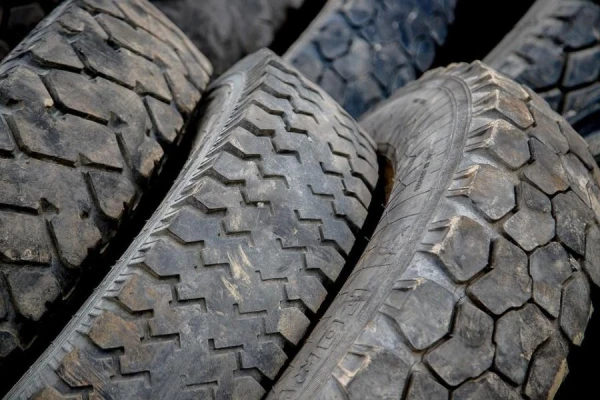
This is not the best way: rubber exposed to direct sunlight begins to dry out, losing its elasticity. As a result, the tire may develop cracks. Severe frosts also negatively affect tires — the tread may become "hardened."
Ideally, after "changing tires," the wheels should be taken to special warehouses, but if that is not possible, at least cover them from the sun with tarps.