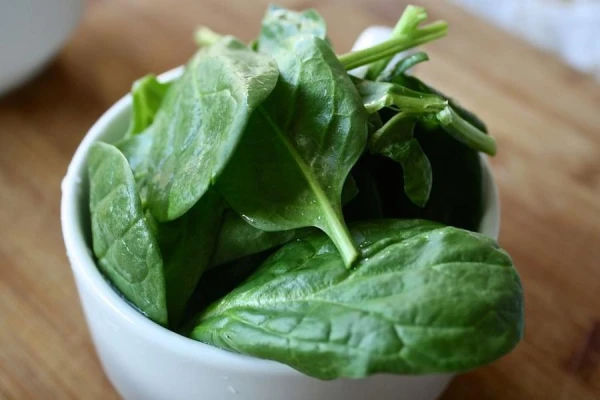
Spinach has gained popularity among chefs and is actively cultivated worldwide.
Spinach seedlings can be sown both in winter and in spring, using a greenhouse or an open area.
Growing this plant is not particularly difficult if certain recommendations are followed.
Sowing Spinach in Spring
Spinach is a fast-growing crop that can be sown either in a greenhouse or directly in open ground.
Growing Spinach in a Greenhouse
To achieve a rich harvest, the soil must be abundantly fertilized with compost. Spinach requires sufficient light, so it is best to start sowing in February. Don’t forget to follow the lunar calendar for vegetables and greens.
Be sure to familiarize yourself with the manufacturer’s recommendations for planting spinach. The temperature in the greenhouse should be 10-13 degrees Celsius on cloudy days and 18 degrees on sunny days.
Before planting, the seeds should be soaked in water for 1.5 days, then dried and sown.
Growing Spinach in Open Ground
This frost-resistant plant can be sown directly into the soil. The seedlings can withstand frosts down to 7 degrees. Sowing spinach in winter is also possible.
Planting spinach after the snow melts:
To obtain mature leaves, seedlings are planted from mid-April to the end of July.
For fresh spinach consumption, sowing should be completed by mid-August, maintaining an interval of 25-30 days between plantings. Spinach is planted in rows at a shallow depth, after which it is covered with soil.
Soil Preparation for Spinach
Spinach requires quality soil. Organic soil is best for it. A high yield can be achieved by growing spinach in loamy soil. If the soil is sandy, the seedlings will need to be watered frequently.
The soil should be prepared in advance, preferably in the fall. For this, the soil is dug up together with compost and mineral fertilizers.
In spring, the area should be sprinkled with urea and leveled with a rake. It is not advisable to fertilize spinach with fresh organic matter, as this may impair its taste.
When the second true leaf appears, the seedlings should be thinned, leaving a distance of 7-10 cm between plants. Otherwise, the plant may become infected with powdery mildew. Then the plants need to be watered. Spinach requires abundant watering, but care should be taken to avoid waterlogging.
If necessary, along with watering, spinach can be fertilized with nitrogen fertilizers. Phosphorus and potassium are not suitable. During the growing season, the soil should be regularly loosened.
Harvesting
Spinach is harvested when 4-6 leaves form on the bushes. Spring-sown spinach can be harvested after 9-10 weeks, while summer-sown can be harvested after 11-12 weeks.
It is essential to harvest on time to prevent the leaves from overripening and becoming tough and unpalatable. Spinach is cut just below the first leaf or pulled out with the roots. It is best to harvest in the morning after rain or watering when the leaves are soft.
Spinach is stored in a dried form in a plastic bag on the bottom shelf of the refrigerator. It can also be frozen for later use in winter. However, fresh spinach is tastier and contains more nutrients.