
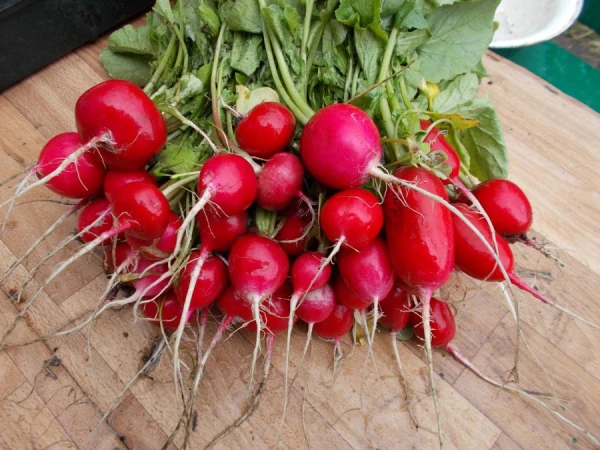
Radish is probably the first domestic spring vegetable. This valuable source of vitamins and phytoncides contains bitterness, which helps to gently stimulate bile production in the liver, prevents stagnation in the gallbladder, and protects against inflammation of the organ in a sedentary lifestyle.
But that's not all the charms of this bright product. What you should know was told to us by Elena Pavlova — gastroenterologist, geriatrician, nutritionist.
Intestinal broom
Radish contains insoluble fiber that acts like a broom for the intestines and improves peristalsis. It has more vitamin C than lemon when calculated per 100 g, and the anthocyanins from the skin enhance its effect. It contains indole-3-carbinol, as this vegetable belongs to the cruciferous family, like cabbage and broccoli.
The glycemic index of radish is only 15, making it one of the safest products for patients with insulin resistance and type 2 diabetes. It provides volume in the stomach and a feeling of satiety but does not sharply increase glucose and insulin levels. Radish is 93% water, contains potassium, which is beneficial for the cardiovascular system, but can be an aggressive environment for inflamed mucosa.
Why radish can irritate the gastrointestinal tract
Radish contains essential oils and bitterness, which stimulate the production of gastric juice and bile, and can cause irritation and burning during mucosal inflammation. Therefore, we do not eat it during exacerbation of peptic ulcer disease and gastritis to avoid irritating the already inflamed mucosa.
Radish contains coarse insoluble dietary fibers that act like a brush, which is good. However, with inflamed mucosa due to ulcerative colitis or Crohn's disease, the fibers can mechanically damage the inflamed or thinned intestinal mucosa. In these conditions, radish can only be eaten during stable remission and in grated form with oil. A portion is 3-4 medium radishes, 1-2 times a week.
Better than bran
In cases of irritable bowel syndrome with constipation, adding radish to the diet often provides better results than pharmacy bran and causes less bloating. Indeed, in 100 g of radish (about 6-7 pieces), there is almost 15% of the daily fiber requirement. If there is no spasm and pain syndrome, radish can be used to prevent constipation, but it must be thoroughly chewed or finely grated, as with mucosal inflammation.
During exacerbation of chronic pancreatitis, the vegetable will stimulate the secretion of the pancreas, leading to a painful attack, so it is better not to include the vegetable in the diet until the remission period arrives.
Who should avoid it
-
During exacerbation of peptic ulcer disease of the stomach and duodenum, Crohn's disease, we do not use radish, as bitterness and fiber irritate the mucosa.
-
In acute pancreatitis, it is also prohibited, as it may stimulate the pancreas, which increases pain.
-
In acute cholecystitis and gallstone disease with stones, radish is banned due to its bitterness and powerful choleretic effect. It can shift a stone and block a duct. In enterocolitis with diarrhea syndrome, it may accelerate peristalsis and dehydration. In irritable bowel syndrome with spasmodic pain, it can cause gas formation and spasms, which will exacerbate the pain syndrome. In gastroesophageal reflux disease (GERD), it can provoke heartburn and reflux.
-
Radish contains a moderate amount of oxalates, which can form microcrystals that scratch the mucosa during passage in those prone to stone formation. It can be used, but no more than 1-2 times a week, cautiously — in cases of gout and urolithiasis.
-
We do not use it in the diet for children under 3 years, as they have an immature enzymatic system. Radish is rich in vitamin K, which reduces the effect of anticoagulants, such as warfarin, so people using these medications should be cautious.
Why is it better to eat radish with sour cream?
Sour cream can relieve irritation, as it will coat the stomach mucosa, creating a protective film, thus neutralizing the mustard oils and fiber, which may reduce burning. Calcium from dairy products neutralizes oxalates. This leads to the formation of insoluble salt, which is not absorbed and does not damage the mucosa, and salts are not deposited in the kidneys as stones.
If you take the richest sour cream, it will help absorb fat-soluble vitamins from radish — beta-carotene (provitamin A), vitamins E, D, K, because they are absorbed only in the presence of fat. The lactic acid bacteria in sour cream partially ferment the coarse fiber of radish, reducing gas formation in the colon.
In the diet, we use only young radish, as old root vegetables have coarser fiber and more mustard oils. The skin contains the maximum concentration of fiber and essential oils; in gastritis, it can be removed to reduce negative consequences in the form of mucosal irritation.
We slice the radish into thin rounds or grate it to make it easier to process. We do not consume it on an empty stomach or as a mono-option, but only as part of a meal — in combination with cereals, meat, or fish.
A healthy person can consume 150-200 g per day, which is about 10-15 pieces; in gastritis during remission — 50-70 g (3-4 pieces) 1-2 times a week. Do not wash it down with cold water, as a sharp temperature change increases stomach spasms, making it harder to process food.
Radish is not just a decoration for a salad, but a functional product for the liver and intestines, but it is important to use it cautiously, without overloading the body, to avoid exacerbations of existing diseases.














Leave a comment