
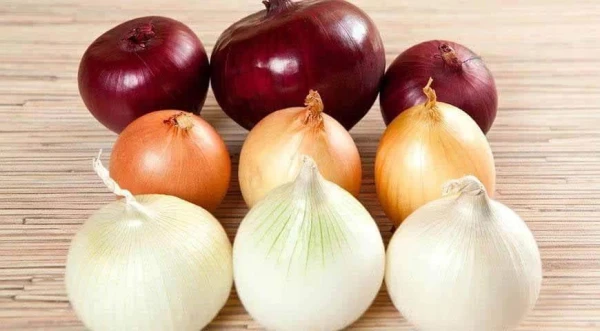
Onion is one of the most sought-after vegetables in world cuisine. This versatile product can be used for caramelizing, frying, and pickling. It serves as a base for soups, sauces, and side dishes. There are many popular varieties that have noticeable differences from each other.
Red Onion
On the outside, it appears purple, burgundy, and even blue. This vegetable is perfect for grilling, roasting, and pickling. Due to its mild and slightly sweet flavor, it can be consumed both raw and cooked. To reduce its sharpness, the onion should be sliced into rings and soaked in water. Pickling enhances the vegetable's natural sweetness and adds zest to salads, burgers, and sandwiches. When peeling, it causes fewer tears than other varieties.
Yellow Onion
This variety is most pronounced when raw. It contains more sulfur compared to other types, which gives it a sharp taste and smell. When cooked, the vegetable becomes sweeter and softer, enriching the aroma of various dishes. Yellow onions are ideal for soups, stews, gravies, sauces, fish, braised pork, beef, poultry, and meat. When sautéed, they caramelize. Raw, these vegetables can significantly irritate the mucous membranes of the eyes.
White Onion
This onion is most often used raw. It is milder and sweeter than yellow onions. It is a staple ingredient in Mexican cuisine. The vegetable is added as a filling for sandwiches, burgers, and hot dogs, as well as in traditional dishes such as refried beans and tacos.
Sweet Onion
This variety is less pungent than the others and has the highest sugar content. In color, it resembles yellow onion but is lighter and larger. Sweet onions are excellent for making dressings, pies, jams, and glazes. They also make great onion rings.








Leave a comment