
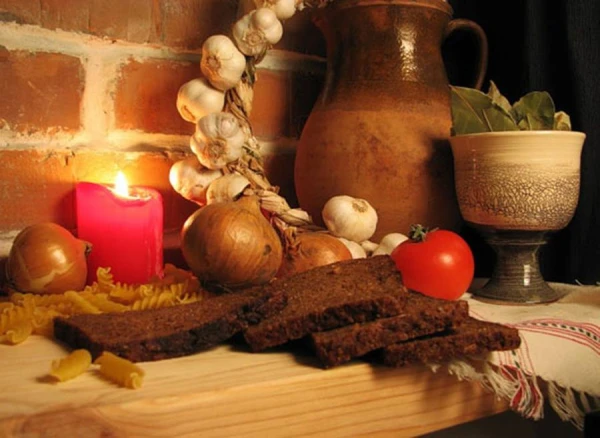
The diet of believers includes only plant-based products.
Vegetable oil is allowed to be used only a few times a week. Thus, the permitted foods include:
grains;
bread;
baked goods without eggs and milk;
dried fruits and honey;
vegetables;
fruits;
greens;
mushrooms;
nuts;
legumes;
soy food;
plant-based milk;
jelly;
compotes;
tea and coffee.
Fish and caviar are also included in the Great Lent menu. However, they can only be consumed three times during the entire period of Lent. We will discuss the specific days when this is possible later, when we move on to the fasting calendar. It is also worth noting that wine is permitted for those fasting, which can be included in the diet on Saturdays and Sundays. The main thing is to maintain moderation.
As for prohibited foods during Great Lent, the restrictions apply to:
* meat products (sausages, pâtés, cutlets, minced meat, etc.);
* dairy products;
* eggs;
* chocolate and other sweets based on milk;
* baked goods with milk and eggs;
* butter.
It is recommended to avoid spicy, salty, and seasoned foods. Finally, one should not succumb to gluttony. Overeating even permitted fasting foods is considered a sin.
Great Lent Calendar for 2024: Nutrition by Weeks
The degree of strictness of the restrictions varies from week to week. Therefore, to understand which foods are permitted on which days during the fast, we present the Great Lent calendar for 2024. We remind you that it is divided into seven weeks.
March 18–24
March 18 — fasting;
March 19 — dry eating (raw plant foods);
March 20 — dry eating;
March 21 — dry eating;
March 22 — dry eating;
March 23 — hot dishes with oil;
March 24 — hot dishes with oil.
March 25–31
March 25 — dry eating;
March 26 — thermally processed dishes without oil;
March 27 — dry eating;
March 28 — thermally processed dishes without oil;
March 29 — dry eating;
March 30 — hot dishes with oil;
March 31 — hot dishes with oil.
April 1–7
April 1 — dry eating;
April 2 — thermally processed dishes without oil;
April 3 — dry eating;
April 4 — thermally processed dishes without oil;
April 5 — dry eating;
April 6 — hot dishes with oil;
April 7, Annunciation — hot dishes with oil and fish.
April 8–14
April 8 — dry eating;
April 9 — thermally processed dishes without oil;
April 10 — dry eating;
April 11 — thermally processed dishes without oil;
April 12 — dry eating;
April 13 — hot dishes with oil;
April 14 — hot dishes with oil.
Nutrition for April 15–21
April 15 — dry eating;
April 16 — thermally processed dishes without oil;
April 17 — dry eating;
April 18 — thermally processed dishes without oil;
April 19 — dry eating;
April 20 — hot dishes with oil;
April 21 — hot dishes with oil.
April 22–28
April 22 — dry eating;
April 23 — thermally processed dishes without oil;
April 24 — dry eating;
April 25 — thermally processed dishes without oil;
April 26 — dry eating;
April 27, Lazarus Saturday — hot food with oil and caviar;
April 28, Palm Sunday — hot food with oil and fish.
April 29 – May 4
April 29 — dry eating;
April 30 — dry eating;
May 1 — dry eating;
May 2 — thermally processed dishes without oil;
May 3 — fasting;
May 4 — thermally processed dishes without oil;
Nutrition on May 5: What to Eat on Easter
Separately, the calendar of Great Lent highlights Bright Easter, which falls on May 5 this year. There are no restrictions on food and drink during Easter. The only requirement is to maintain moderation and avoid overeating. Traditional Easter treats include:
colored eggs;
kulich;
cottage cheese Easter cake.
It is customary to bless festive dishes in the church or temple, which should be done on May 4, Holy Saturday.
Remember that the main thing in fasting is spiritual work. Listen to your body and be attentive to those around you.











Leave a comment