
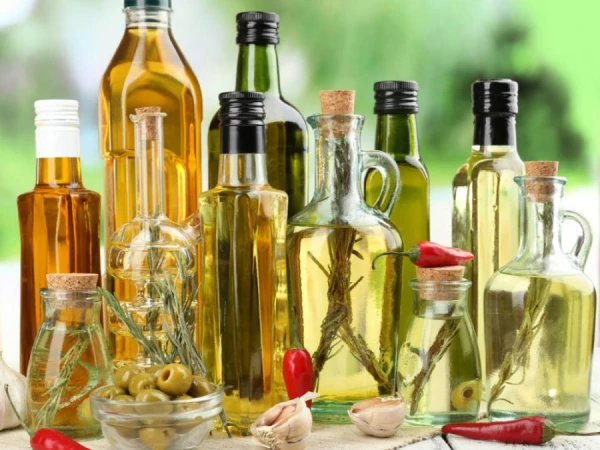
The World of Vegetable Oils: From Olive to Sesame
Experimenting with vegetable oils can be done for several reasons. Firstly, there is variety: besides the familiar olive and sunflower oils, there are many other options. Secondly, unrefined cold-pressed oils have unique beneficial properties — each in its own way. New flavors not only diversify the diet but also add a bit of health. And finally, it’s simply enjoyable. Let’s take a look at the most beneficial ones.
Olive Oil
In recent years, olive oil has become almost as much a topic of discussion as wine. Producers hold tastings, compile annual rankings of the best oils, and experts study hundreds of varieties of olive trees and oils from different countries. The most authoritative ranking is considered to be Flos Olei. There is no need to delve into the details of taste and aromatic characteristics right away, but everyone can familiarize themselves with products from the best countries and remember a few basic varieties. Over time, you will learn to distinguish light oils from richer ones, as well as identify notes of freshness from balsamic, mint, and rosemary in Italian oils or almond and sage in Greek oils. It is important to remember that we are talking only about first-press oils.
Walnut Oil
For the first time, the rich and aromatic oil made from roasted walnuts began to be used in France in the mid-19th century. Previously, oil was pressed from raw nuts and was used for woodworking (for example, for Stradivari violins). Modern walnut oil is characterized by a bright, versatile, and rich flavor that pairs wonderfully with warm vegetables and fish. This oil is particularly beneficial for blood vessels and is recommended for varicose veins and atherosclerosis.
Pumpkin Oil
Oil from pumpkin seeds began to be pressed 400 years ago in Austria. Pumpkin fields, slowly ripening under the sun, yield fragrant and oily seeds that give the oil a complex dark green and brown color with a sweet nutty aftertaste. This is one of the most unusual oils in terms of flavor. It has powerful anti-inflammatory properties, helps with gastritis, and supports normal liver function. Pumpkin oil is added to salads and warm cereals, such as polenta. It is best stored in the refrigerator for no more than 3–4 months.
Avocado Oil
This oil has become a favorite in recent years, especially in the beauty sector. The first avocado oil was made not long ago to utilize damaged fruits. Today, avocados are grown specifically for oil production. The best oils are produced in California, Chile, Australia, New Zealand, and Israel. Cold-pressed avocado oil tastes similar to the flesh of the fruit itself. It is highly valued by chefs for its high smoke point, which allows frying without losing beneficial properties. The high concentration of polyunsaturated fatty acids makes this oil beneficial for the skin and provides powerful antioxidant effects on the entire body. Use it for dressing fresh salads or sautéing vegetables.
Coconut Oil
Coconut oil is widely used in both body and hair cosmetics as well as in cooking. A couple of tablespoons of oil can help normalize metabolism and improve skin condition. It aids in normalizing thyroid function, regulates glucose and cholesterol levels, and improves stomach and intestinal function, being easily digestible. We do not hesitate to use coconut oil not only externally, applying it to the skin after a shower and nourishing hair, but also add it to salads, fry, stew, and use it in baking and ice cream.
Rapeseed Oil
This oil is often found in Western sources, but unfortunately, in our latitudes, it is more commonly used in refined form. However, all beneficial properties are preserved only in unrefined cold-pressed oil, which are lost during the refining process. If you manage to find whole cold-pressed oil, you will get a neutral, light oil with a slight peppery taste. It is valued for its high content of Omega-3 and Omega-6 fatty acids.
Sesame Oil
There are two types of sesame oil: dark, amber, and aromatic, which is highly valued in Southeast Asian cuisines, and light beige, obtained from unroasted seeds. Dark sesame oil has a rich flavor of roasted nuts and hot chocolate, making it perfect for dressing cold dishes, appetizers, and soups. You can fry with light sesame oil, but its flavor will be significantly diminished. Sesame oil effectively normalizes stomach acidity and fat metabolism, and in terms of macro- and micronutrient content, it is a champion for calcium, which is essential for the full development of bone and cartilage tissue.














Leave a comment