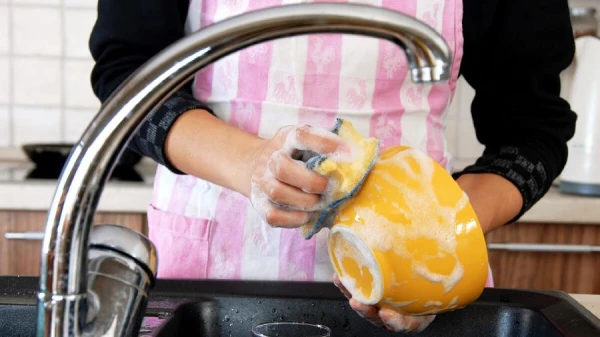
Dish sponges are an essential item in every kitchen. However, improper use can negatively affect health, especially if there are children or people with weakened immune systems in the home.
Often we create problems for ourselves because, despite the label "for washing dishes" on the packaging, we use sponges for purposes other than intended, even within our own kitchens. Moreover, we change them too infrequently, reports Doctorpiter. What do specialists think about this?
Bacterial Threat: Who Lives There?
“Sponges can accumulate and spread many dangerous bacteria to other kitchen items,” says immunologist Elena Paretskaya. “Various studies have found salmonella, campylobacter, listeria, E. coli, and pathogenic staphylococci. All these microorganisms can cause infections—gastrointestinal disorders, skin diseases, respiratory problems, and so on—when they enter the human body.
The journal Scientific Reports published the results of a detailed analysis of the microflora of dish sponges. The data is impressive: up to 360 different species of bacteria were found per square centimeter, with a total number reaching 45 billion!
Regular Replacement is Key to Safety
Frequent cleaning of sponges helps reduce the number of bacteria and change the composition of the microbial flora to a safer one; however, sponges do not become completely sterile. Therefore, the correct solution is to replace them regularly; otherwise, the risk of illness remains very high.
For example, campylobacter is usually found in raw meat and can survive on sponges for up to a day. If it enters the body, cramps, abdominal pain, diarrhea, nausea, vomiting, and fever may occur within 2-4 days. Campylobacteriosis is especially dangerous for children and people with weakened immune systems.
Long-Term Threat
Studies have shown that salmonella can survive on dish sponges for up to 7 days. Moreover, sponges that dry slowly pose a greater danger. If a sponge is not wrung out and dried, salmonella multiplies quickly, and its concentration becomes extremely high. Therefore, be sure to wring out and dry sponges after use.
Use as Intended
“Sponges are often used for purposes other than intended: they may be used to wipe up spilled liquids from meat, milk, and to clean the stove from burnt soup. Many do not even think about this. Sponges are also used to clean vegetables and fruits, as well as to wash hands after various tasks. This should not be done,” warns the doctor.
How Often to Replace Sponges
Sponges are often used until they become shapeless clumps, which can take weeks or even months. Signs that a sponge needs to be replaced include the presence of dirt, remnants of burnt food on the rough side, and deformation. To keep sponges safe, it is recommended to:
* thoroughly rinse and wring out the sponge after washing dishes;
* remove debris and food remnants from the sponge with each wash, and if it doesn’t come off—throw it away;
* store sponges in a separate dry container, not leaving them in the sink with water;
* change the sponge once a week or more often if it is heavily worn;
* immediately throw away the sponge if it emits an unpleasant odor.
It is also important not to use sponges for wiping countertops or cleaning up liquids from meat. For these purposes, it is better to use paper towels or special wipes.