
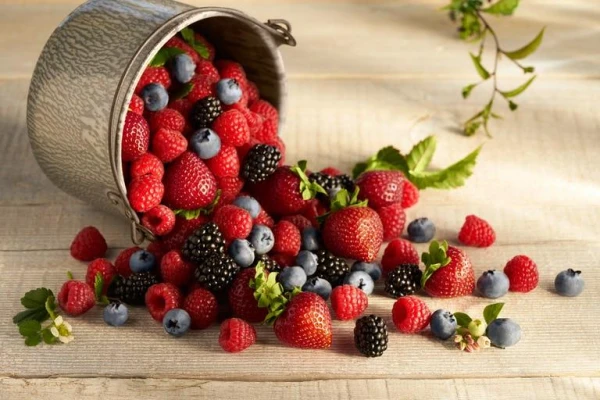
Scientists have long searched for the elixir of youth. After decades of research, they concluded that it is possible to extend life by choosing the right foods.
“Don’t eat cranberries if you can’t pucker,” goes the old saying. However, researchers from Pennsylvania, who completed their study and published the results in The Journal of Nutrition, disagree. Cranberries became the central focus of their scientific interest.
The aim of the eight-year study was to analyze the impact of flavonoids on the immune functions of the participants in the experiment – 37,232 individuals.
Before the main phase of the work began, the authors analyzed the dietary habits of the volunteers, which allowed them to determine how much bioactive substances they were receiving from the berries.
The researchers were primarily interested in flavonoids – key components of berries that possess numerous protective and even therapeutic properties.
Flavonoids (or bioflavonoids) are a group of biologically active substances that strengthen blood vessel walls and have antiarrhythmic, antihypertensive, and antioxidant properties.
Long-term observations led to two conclusions. The first is encouraging, while the second raises concerns. It was found that higher consumption of berries and, consequently, flavonoids is associated with a reduced risk of mortality among adult participants.
Nevertheless, not everyone monitors the intake of necessary substances in their body and regularly eats berries, which is the pessimistic part of the conclusions.
Meanwhile, just half a cup of cranberries, blueberries, or strawberries a day can fully meet the daily requirement for flavonoids. Modern technologies allow enjoying these berries year-round, not just during their harvest season.
Cranberries emerged as the leader among plants affecting the risk of premature mortality, reducing this risk by nearly 31%. They are followed by blueberries (21%) and strawberries (14%).
These berries became the most popular among study participants, which is why other types were not included in the analysis. The comparison was made with those who consumed little to no berries at all.








Leave a comment